共在无何乡——尹朝辉、尹朝宇双个展
Yin Zhaohui & Yin Zhaoyu:TOGETHER IN NOWHERE LAND
展期:2025年11月17日—2026年01月26日
学术主持:庄泽曦
艺术总监:黄向前
策展人:李海洋
艺术家:尹朝辉、尹朝宇
地点:汇美艺术馆|郑州管城区银莺路76号汇美茂购物中心四楼
展览名称取自唐代寒山禅师偈语,呈现孪生兄弟尹朝辉、尹朝宇在人生和艺术上的共同期待,展现其艺术创作的相通性与对照性,以及个人生命样态与艺术理想的重建。The exhibition title is derived from the verses of Chan Master Hanshan of the Tang Dynasty, presenting the shared expectations of twin brothers Yin Chaohui and Yin Chaoyu in life and art, showing the similarities and contrasts in their artistic creation, and the reconstruction of personal life patterns and artistic ideals.
11月17日,汇美艺术馆即将推出尹朝辉尹朝宇双个展“共在无何乡”。展览名称取自唐代寒山禅师的偈语,这是两兄弟在人生和艺术上的共同期待。尹朝辉尹朝宇是一对孪生兄弟,他们拥有相同的成长背景,相近的生活经历,在艺术创作的底层理念上具有极强的相通性和对照性,这样的情况导致人们在观看他们时会有意无意地进行比较。所以,他们在面对对方时不仅要自觉地自我剥离,同时也要与这个世界进行掰扯。
展览由策展人李海洋策划,艺术家黄向前担任艺术总监,策展人庄泽曦作为学术支持。他们将从不同的角度来呈现这对孪生兄弟之间的交织、撕裂与揉合,从而完成个人生命样态与艺术理想的重建。
Preface前言
他们似乎走了不同的路,分出支流,最终又汇合到一起。面对世界的挤压,他们也曾退回各自的营垒整军备战,再度出击。经历过中国当代艺术的狂飙时代,魔幻现实的图景波谲云诡,也要面对大哥的光芒四射。尹朝辉与尹朝宇,他们选择了不同的路径:朝辉向内,朝宇向外。
They seem to have taken different paths, branching out like rivers, only to converge again in the end. Confronted with the pressures of the world, they have also retreated into their respective fortresses to regroup before launching fresh offensives. Having lived through the whirlwind era of Chinese contemporary art, with its fantastical and shifting realities, they also had to face the radiant brilliance of their elder brother. Yin Zhaohui and Yin Zhaoyu chose different paths: Zhaohui turned inward, while Zhaoyu turned outward.
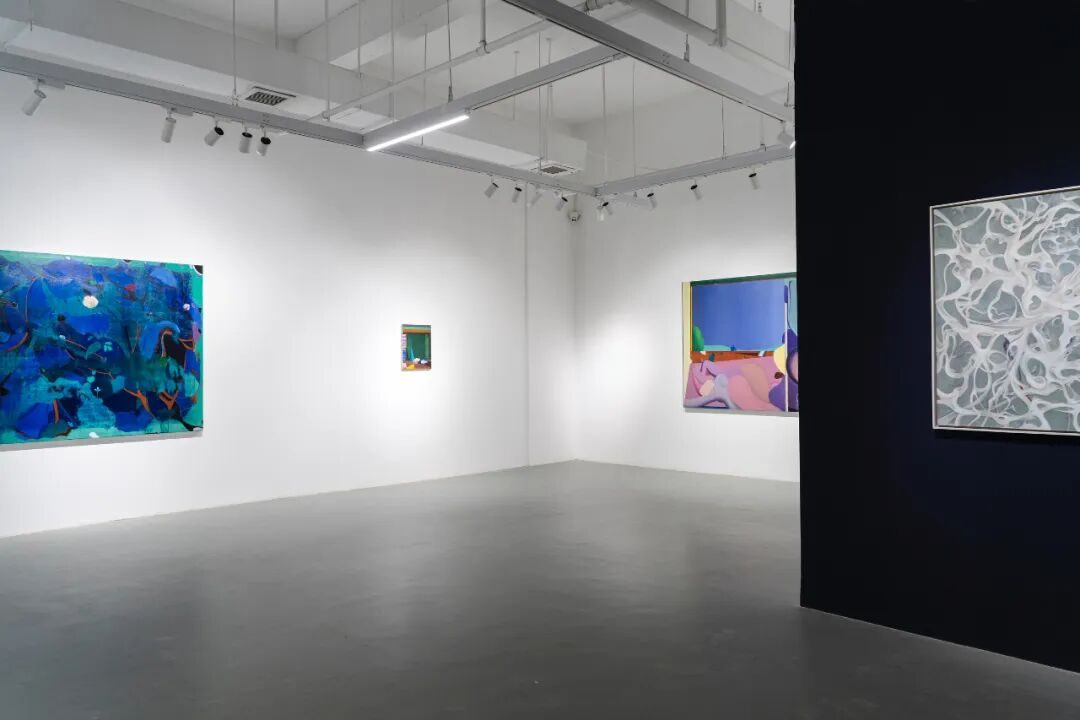
在早期代表性的创作中,尹朝辉聚焦在身体的局部,以“我”为中心,放射状地去回应世界。对局部的关注,源自尹朝辉对外部世界的切肤之痛,主动地屏蔽外部冗杂的外部信息,通过设置茧房来启动自我保护机制。我们看到朝辉这个时期的作品,或红、或绿、或白的画面氛围因为手的作用力导致面孔扭曲,狰狞的表情营造出诡异氛围。从面孔,到身体局部,再回到手指的局部,被挤压变形的不成比例的手指,也为后续以线条为主的创作埋下伏笔。相对立体的造型潜意识地为自己存留了可进退的空间,当朝辉剔除了最后的立体空间完全使用平面化的线条时,他已经从内心的波涛汹涌进入开阔的平滩之地。
In his early representative works, Yin Zhaohui focused on parts of the body, using the “self” as a central point from which to radiate outwards and respond to the world. This focus on fragments stemmed from his acute personal pain caused by the external world; he actively blocked out redundant external information, initiating a self-protection mechanism by creating a cocoon. The works from this period of Zhaohui’s career feature atmospheres dominated by red, green, or white, where faces are distorted by the force of hands, and ferocious expressions create an eerie mood. From faces, to body parts, and then back to the parts of fingers, the squeezed and disproportionally deformed fingers also foreshadowed his subsequent line-dominated work. The relatively three-dimensional forms subconsciously preserved a space for maneuver. When Zhaohui eliminated the last vestiges of three-dimensional space and fully embraced flattened lines, he had already moved from inner turmoil to an expansive, calm shore.
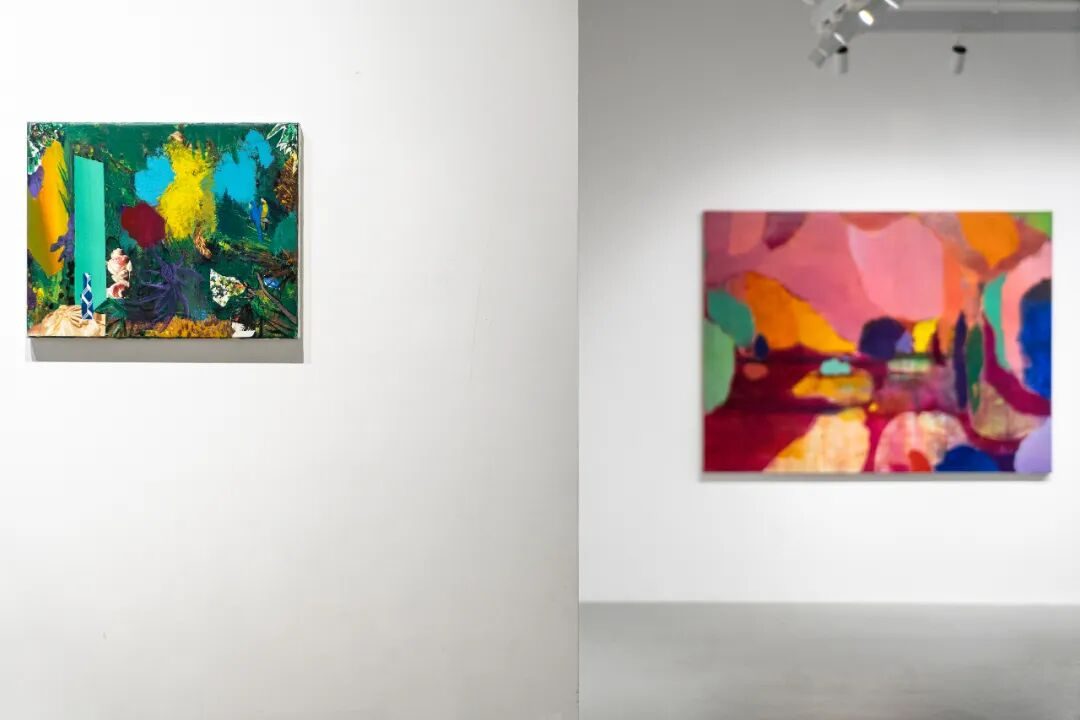
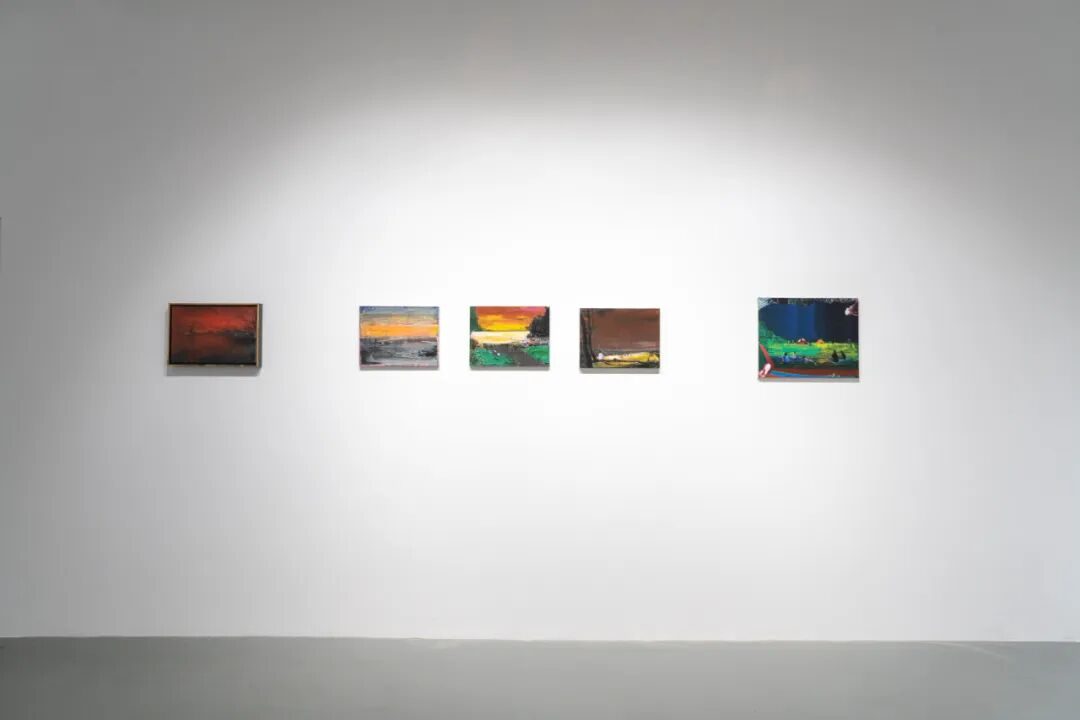
从2018年开始,朝辉从身体的局部转向自然的风景。其实,在朝辉的理念中,身体自成独立系统,而自然的风景是世界的表情。这一时期,朝辉的表现方式和观察方式是东方古典式的,如同中国古人在认知自我时,通过自然与宇宙的对应,来实现天人合一的理想。风景创作两条清晰线索同时推进:一个是将自己放逐山野的自然之态,一个是内观诸己的室内景。室外景是朝辉与世界的坦诚相待,室内景是自我性情的塑造。
Starting in 2018, Zhaohui shifted his focus from parts of the body to natural landscapes. In his philosophy, the body is its own independent system, while natural landscapes are the expressions of the world. During this period, Zhaohui’s methods of expression and observation were classically Eastern, akin to how ancient Chinese sought to understand the self through correspondence with nature and the cosmos, aspiring to the ideal of the unity of heaven and humanity. His landscape work progressed along two clear parallel lines: one involved exiling himself to the wildness of nature, the other involved turning inward to interior scenes. The outdoor scenes represent Zhaohui’s candid engagement with the world, while the interior scenes represent the shaping of his inner self.
与朝辉看似明晰的线索不同,朝宇的方式是四面出击,不停地震荡。从形式化的小型实验(地平线系列),到追求绘画性的机场系列,到当下重建秩序的室内景,朝宇一直在追求平衡却拒绝稳定,平衡既是对审美的苛责,也是生命去向的追问,他要发展出更多的可能。2008-2010年间的机场系列,从硬边分割到过渡边界的模糊化表现性处理,经典性标准化的三分之一的构图方式一直伴随,建立稳定的秩序之后,朝宇会立即主观地进行偏移、摇摆。转向室内景之后,杂乱无章的堆叠,有一种“让暴风雨来得更猛烈些”的肆意,强行植入的拼贴、象征着秩序和规则的几何体让画面回归理性。从室内景调整到室外,这个时期的朝宇以“我”为原点,身在室内,心向室外,作为局外人自如地进行身份转换,悠然地与世界对话。这时的人物已经放松下来,坦然面对世界的纷扰,对抗已经转达成和解。
As thespace. Unlike Zhaohui’s seemingly clear trajectory, Zhaoyu’s approach was to strike out in all directions, constantly oscillating. From formal small-scale experiments (Horizon series) to the painterly Airport series, to the current reconstruction of order in his interior scenes, Zhaoyu has perpetually sought balance while rejecting stability. Balance is both a stringent demand on aesthetics and an inquiry into life’s direction; he seeks to develop more possibilities. In his Airport series (2008-2010), he moved from hard-edge divisions to expressive treatments with blurred, transitional boundaries. The classic, standardized one-third composition persisted throughout. After establishing a stable order, Zhaoyu would immediately subjectively introduce shifts and sways. Upon turning to interior scenes, chaotic accumulations conveyed a recklessness, as if urging “let the storm rage stronger,” while forcibly inserted collages and geometric shapes symbolizing order and rules brought the composition back to rationality. Transitioning from interiors to exteriors during this period, Zhaoyu took the “self” as the origin point-physically inside, but mind oriented outward-effortlessly switching identities as an outsider, engaging the world in leisurely dialogue. The figures from this time are already relaxed, facing the world’s disturbances with equanimity; confrontation has transformed into reconciliation.
从起点到现在,尹朝辉与尹朝宇面对世界的方式有着本质的差异。最初,朝辉完全从“人”出发,到完全剔除“人”,跳出自囿,用上帝视角来完成与世界的相处。朝宇以观察者的视角切入,感知世界的风云激荡,直至以身入局,成为世界的一部分,来称取世界的重量。
From the beginning until now, Yin Zhaohui and Yin Zhaoyu have fundamentally differed in their ways of engaging with the world. Initially, Zhaohui started entirely from the “human,” proceeded to completely eliminate the “human,” leaped beyond self-confinement, and adopted a god’s-eye view to coexist with the world. Zhaoyu began from an observer’s perspective, perceiving the world’s tumultuous storms, until finally immersing himself personally, becoming part of the world to weigh its heaviness.
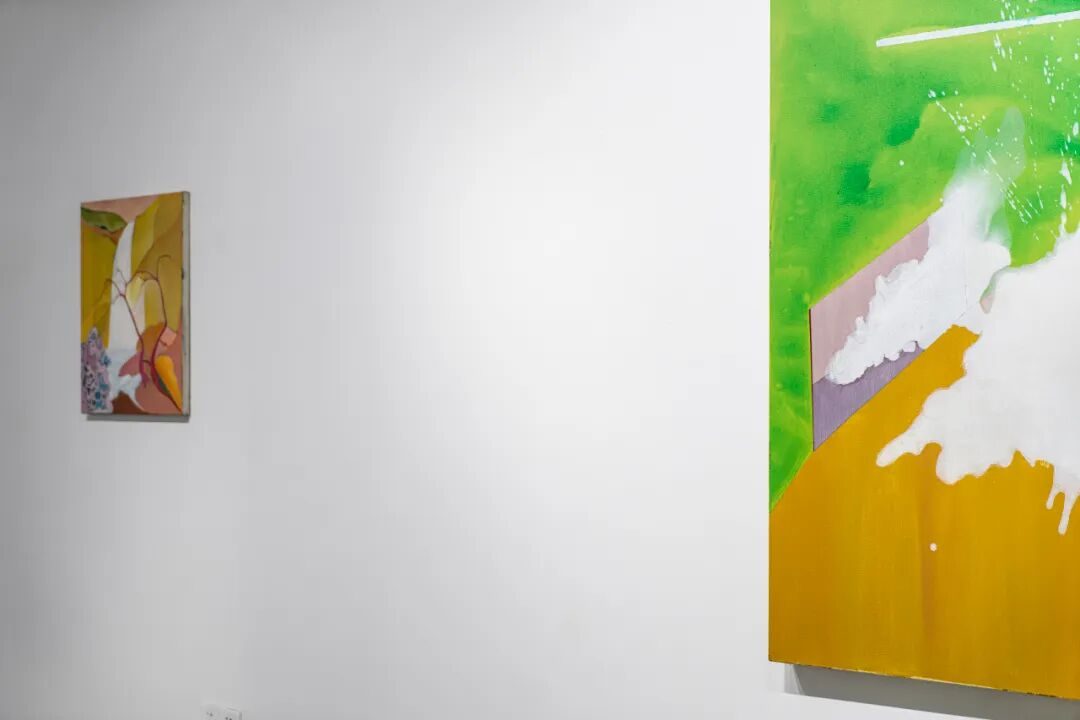
在展览的入口,朝宇以理性的几何抽象作品提示未来的转向,画中的两个人物,一个回头面对我们的审视,另一个躬身入局者,给我们留下孤独的背影。人间一遭,能否抵达“无何乡”的境地尚未可知,只是,生命中荡起的大水花如同朝辉的作品一样,《风动,幡动》。
As thespace. At the entrance to the exhibition, Zhaoyu’s rational, geometrically abstract work hints at future directions. The two figures in the painting-one looking back to face our scrutiny, the other bending forward to enter the fray, leaving us with a solitary背影-pose a question. Whether this journey through life can reach the realm of “Nowhere Land” remains unknown. It is merely that the great splashes stirred up in life are, just as in Zhaohui’s work, where “the wind moves, and the banner moves.”
文_李海洋
by Li Haiyang