以“沙盘”为概念,强调创作和观看过程中的思维推演,作品涵盖绘画、装置等。
Using “sandbox” as a concept, emphasizing the mental deduction in the process of creation and viewing, with works including painting and installation.
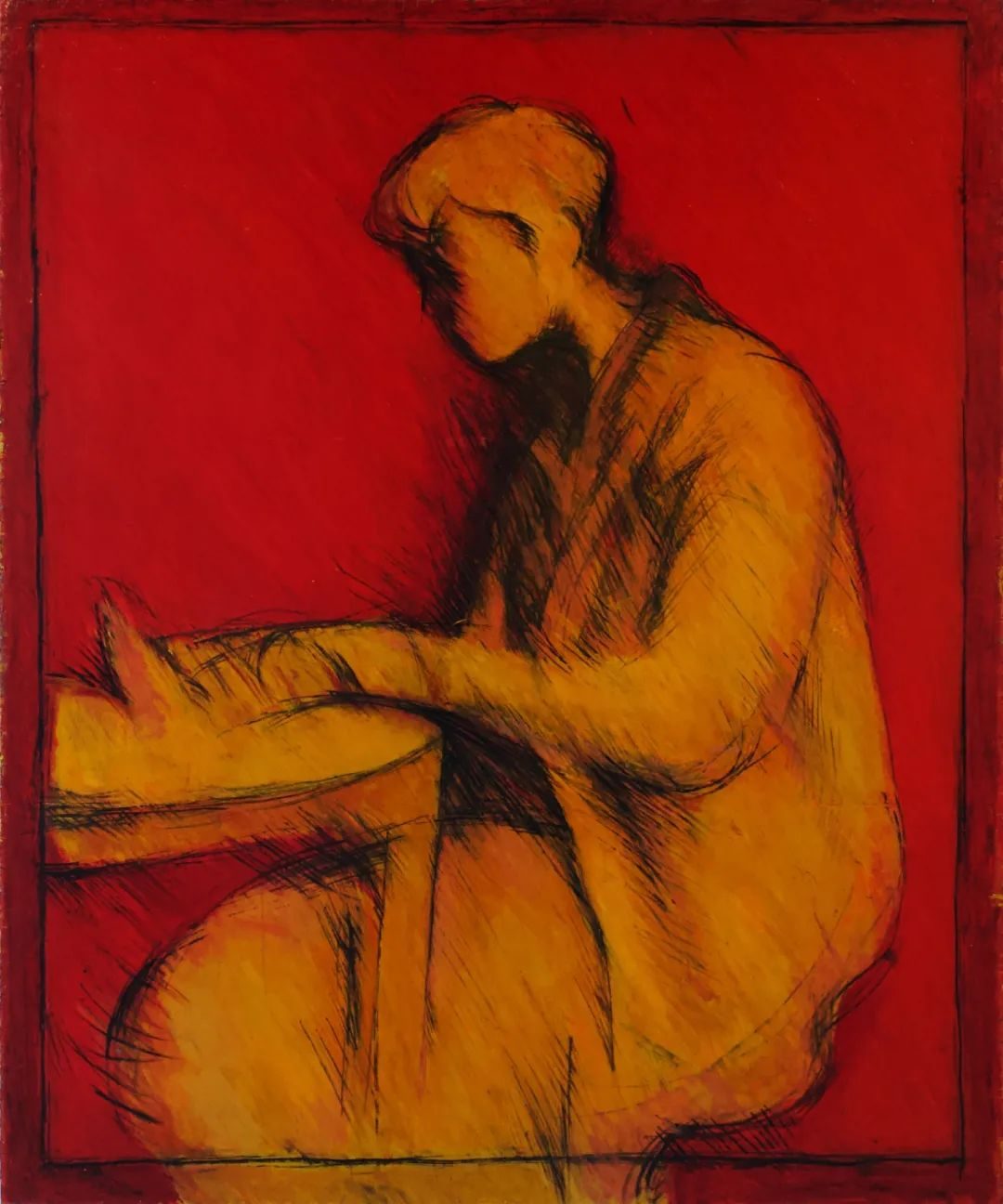
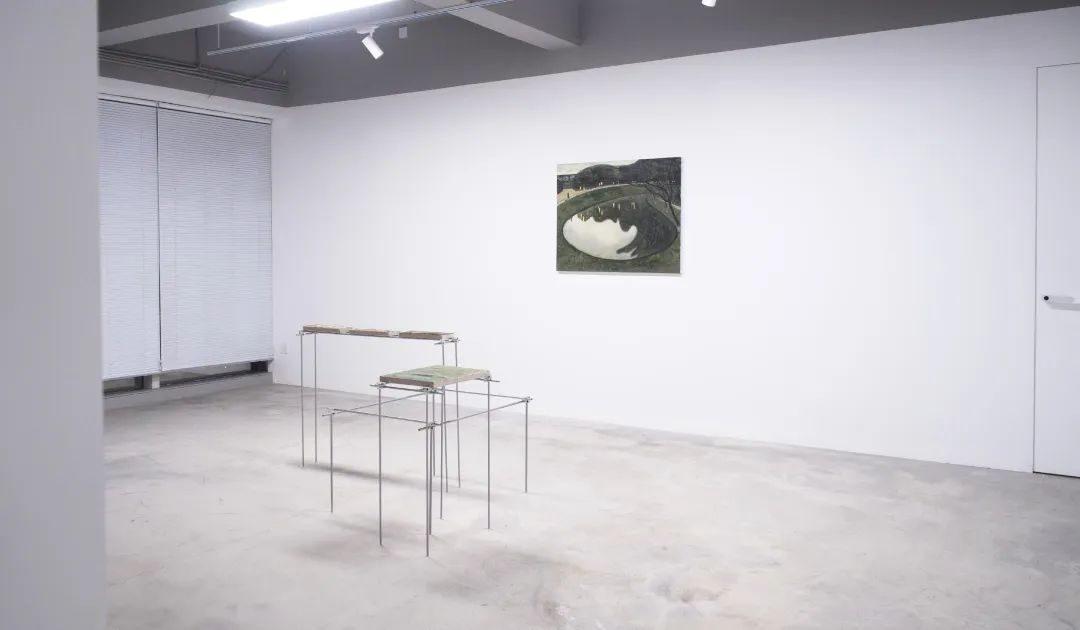
以“沙盘”为意象,是因为它可以用来推演在虚拟的环境中不同可能性。其结果在不知与可知的过程中博弈,沙盘留下的纹路会逐渐复杂,创造者与之为伍,或是委身于它,甚至可以从中获得某种想象、启发或是单纯的快感,从而寄托在一幅画或是多幅画中作为图像的概念和作为概念的图像,不管是通过直接的(自然的)或先验性的(象征的)途径。伴随着痕迹的叠加,那些未成型的灵感通过徐家航细腻的笔迹堆积出相应的视觉厚度以及体积感,相比线条一笔到位的连贯,犹豫的表达反而将他的思考轨迹保留了下来,而画中略显潦草的表达无形当中形成了一套自我阐述的机制。沿袭着这套机制的思路,喻志冰洋作品中的痕迹更像是对现实生活中感觉的狩猎,那些不完全成熟的想法或充满期待的实验在这片创作的沙盘中显得格外自然。这种通过从过往经验中汲取视觉感受与审美体验的途径,在宁子益的表达中却显得有些微妙。具体而言,在她的画中笔触与笔触的排列存在着某种“叙事性表达”,人物的神态以及风景的表述不再是以准确结果的指向,反而是一种自我推演过程中的含蓄再现。徐家航《坐》(Sitting),木板油画,180cm × 150cm,2022如果说这样的推演仍未完成,那么观看者的围观此时此刻成为了沙盘推演的最后一部分——与地面平行或垂直的作品放置方式迫使我们的观看姿势时刻改变——作品不再是一览无余地出现在我们身前,而是需要身体的前倾才能目睹全貌。身体姿态的变化也将原有的“被动”接受转化为“主动”选择。事实上,我们在展厅这种特定的场域是无法思索为何要接受这些图像,不论是否是我们主动从线上观看走向线下观摩,图像的观看早已变成了一种不假思索的结果验证。因此,作品的“躺”或是画中特有的“纹路”,是否能够推到那堵固有的“墙”?使得结果不再理所当然?当展厅变成一个巨大的沙盘时,一场留有痕迹的推演正要开始。宁子益《绿池与星》(Green Pond and Stars),布面油画,40.2cm × 30.2cm,2024
关于艺术家宁子益 NING ZIYI1993年8月生,河北省廊坊人。2017本科毕业于中国美术学院壁画系,获学士学位。2021年毕业于中国艺术研究院美术学系,获硕士学位。现博士就读于中国艺术研究院美术学系。宁子益的创作主要集中于对画面中造型的几何化处理,倾向于雕塑式地表达客观对象,同时关注物像的拟人化处理,注重赋予客观对象独特的语言形象。徐家航 XU JIAHANG1995年生。本、硕均毕业于中国美术学院油画系,现生活工作于上海。徐家航的作品试图将被经验肢解的世界还原成某种庞大之物。这种庞大之物无法被注视,也无法被触摸,它超越了感官的极限,在幻觉与实存的两端明灭。这种怀疑也被烙印进他的作品中:对庞大之物的追寻,对永固和不被侵蚀的迷恋,留下的是不可避免的错误以及或许存在的一点点真相。喻志冰洋 YU ZHIBINGYANG1998年生于重庆。本科毕业于四川美术学院版画系。喻志冰洋的创作聚焦于捕捉平衡与失衡之间的张力,他的灵感来源自马戏团演员、特技演员、运动员等,充满风险的动态有时近乎荒诞,但他们依旧保持专注。这个岌岌可危的状态似乎对照了充满娱乐与高压的现代生活。他试图探讨在日常生活中娱乐背后暗藏的不安,消解那些为了维持现状所产生的疲惫与麻木,行使逃离的权利。Sandbox DeductionQian BaWhen faced with a currently popular image of painting, we often experience a peculiar sense of contradiction. Specifically, it is a bewilderment that arises after encountering the evident surface layers: we should theoretically be able to discern the archetypal truth hidden within the ‘visible objects’ (the depicted forms in the painting), however the patterns formed by the interplay of imagination and intellect upon the image are dissolved, leaving the image way too soothing. These layers cause all viewers to stumble, and even the creators themselves cannot entirely escape this effect. The original viewing context is disrupted by this sudden absurdity, and no one seems to care about the original intent of the creation anymore. Consequently, there arises an urgent need for the “painters’ naive uses of mark-making” but these traces are not simply physical marks. More precisely, they resemble a sandbox simulation—where the emphasis lies in leaving traces throughout the simulation of possible futures rather than pandering to a specific result.The choice of the ‘sandbox’ as a metaphor is due to its capacity to simulate different possibilities in a virtual environment. The results emerge through a negotiation between the unknown and the known. The traces left in the sandbox gradually become intricate, and the creator either coexists with or rely on them, even deriving some form of imagination, inspiration, or sheer pleasure from them. These traces are then entrusted to one or multiple paintings, serving both as the concept of the image and the image of the concept, whether through direct (natural) or a priori (symbolic) approaches.As traces accumulate, the unformed inspirations are meticulously layered by Xu Jiahang’s brushwork, creating a corresponding visual density and sense of volume. In contrast to those seamless certainties of a single stroke, hesitant expressions instead preserve his thought process. The seemingly casual expressions in the paintings unwittingly form a self-explanatory mechanism. Following this mechanism, the traces in Yu Zhibingyang’s works resemble a hunt for sensations from real life. The incompletely matured ideas or eagerly anticipated experiments appear particularly natural in this creative sandbox. This approach of drawing from past experiences to extract visual impressions and aesthetic encounters takes on a subtler form in Ning Ziyi’s expressions. Specifically, in her paintings, there exists a certain ‘narrative expression’ in the arrangement of brushstrokes. The depiction of characters’ expressions and landscapes does not aim for precise results but rather serves as a restrained reenactment in the self-simulated process.If this kind of deduction is still incomplete, then the act of spectators observing at this moment becomes the final component of the sandbox simulation. The placement of the works—whether parallel or perpendicular to the ground—forces us to constantly adjust our viewing postures. The works are no longer fully visible before us at a glance; instead, we must lean forward to grasp their entirety. This change in physical posture transforms the original passive reception into an active choice. In fact, within the specific spatial context of the exhibition hall, we cannot truly reflect on why we are compelled to engage with these images. Whether we actively transition from viewing online to observing offline, the act of viewing images has long become a matter of unthinking validation. Therefore, can the ‘lying down’ of the works or the unique ‘textures’ within the paintings push against that inherent ‘wall’ and make the outcomes no longer self-evident? When the exhibtion space becomes a giant sandbox, a deduction leaving traces behind is about to begin.
中央美术学院拟于2018年2月16日至9月2日于英国举办“兴起:中国当代艺术中的女性声音”(NOW:A Dialogue on Female Chinese Contemporary Artists)展览。此次展览由中国中央美术学院美术馆领衔,联合英国泰特美术馆和英国华人当代艺术中心,将在英国八家公共美术馆同期举办。

中-480x500.jpeg)
中.jpeg)





中.jpeg)
中.jpeg)


