
伊娃·帕图姆:概念女性主义
Ewa Partum: Conceptual Feminism
展期:2025年09月18日—11月02日
艺术家:伊娃·帕图姆(Ewa Partum)
地点:Double Q Gallery|香港上环乐古道68号
作为概念艺术先驱,伊娃·帕图姆的作品与女权主义密不可分,挑战社会不平等、父权制及艺术中女性的代表性,其创作将个人经验政治化,是持续的艺术探索。A pioneer of conceptual art, Ewa Partum’s work is inseparable from feminism, challenging social inequalities, the patriarchal system, and women’s representation in art, with her practice politicizing personal experience as an enduring artistic investigation.
伊娃·帕图姆是概念艺术(Conceptual Art)的先驱之一,她的创作与女性主义密不可分,持续挑战社会不平等、父权制度以及女性在艺术中的再现方式。自1970年代初以来,她便以行动和作品质疑社会对女性行为、外貌与公共空间角色的规训。在她的创作中,“个人即政治”并非口号,而是一种持续的生活化艺术实践。
本次展览是她在亚洲的首次个展,汇集其横跨摄影、影像、混合媒介与纸本的作品,全面呈现她在概念主义与女性主义交汇处的深远贡献。
帕图姆是东欧最早以概念策略明确质疑性别角色的女性艺术家之一。在政治与社会自由受限的年代,她发展出一种根植于自身身体与身份的激进语言,将艺术转化为对抗与解放的场域。
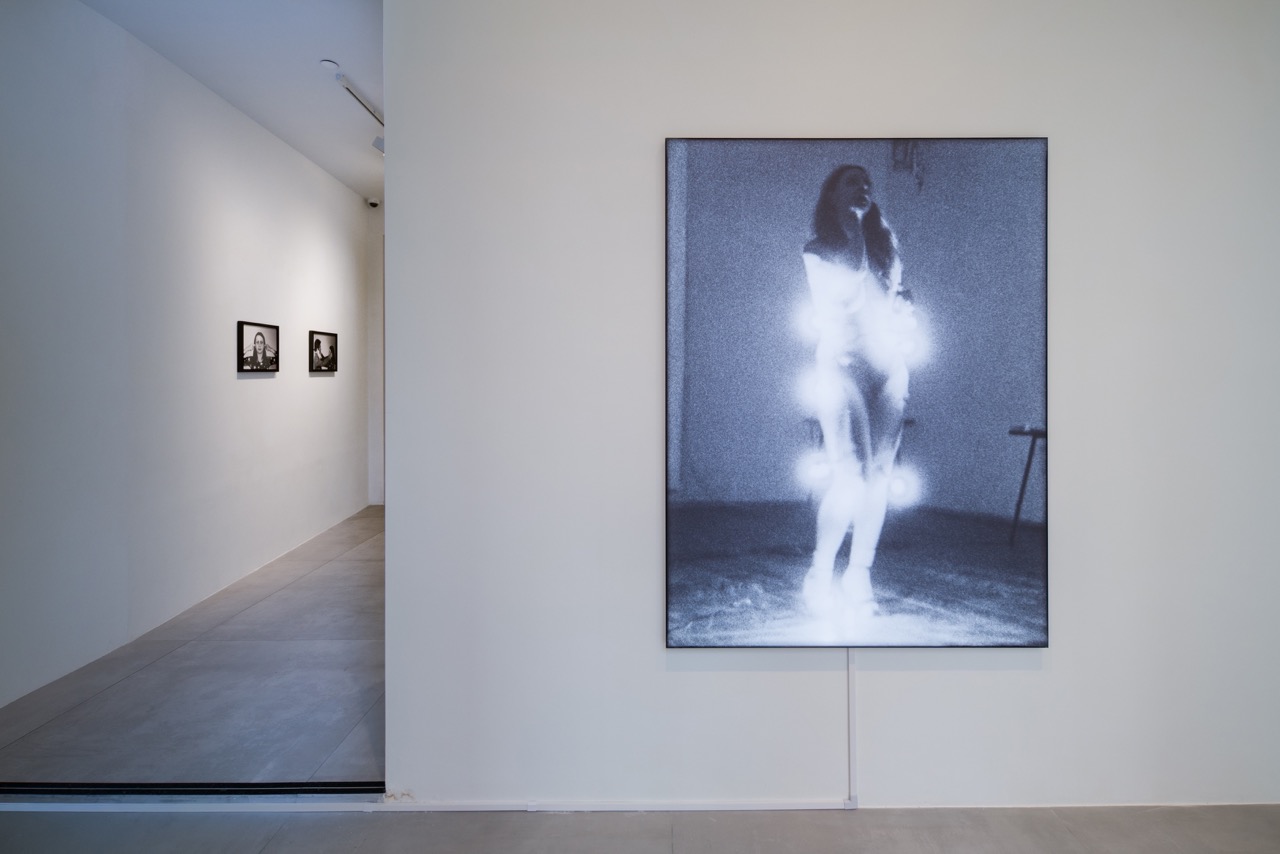
展览中展出的《Change – My Problem Is a Problem of a Woman》(1979)是她最具代表性的行为作品之一。在此作中,她以赤裸身体并非作为男性凝视的对象,而是作为政治声明,迫使观众直面女性在父权社会中生存的现实。作品打破私人经验与公共评论之间的界限,揭示女性身份如何在社会中被建构与维系。
另一重要系列《Self-Identification》(1980)中,帕图姆将赤裸的自己置入城市日常空间——街道、市场、广场——她的身体既是闯入者,也是镜子,映照社会规范与个体存在之间的张力。这些作品并非挑衅,而是提出一个根本问题:在历来由男性权威主导的空间中,作为女性“存在”本身意味着什么?
展览还呈现《Conceptual Exercises》(1972)系列,帕图姆在此玩弄视觉与语言结构,质疑意义生成的机制。她借用佛教“三不猴”寓言(“非礼勿视、非礼勿听、非礼勿言”),通过女性主义视角重新诠释,指出社会对女性“沉默、顺从、视而不见”的期待。她将这一道德训诫转化为对被动性的批判,揭示女性被强加的沉默与顺从。
这些作品共同揭示了一位艺术家始终如一却不断演进的实践。帕图姆的女性主义并非概念主义的附加,而是其根基。她以身体与语言为工具,拆解文化神话,为新的女性主体性开辟空间。
此次在Double Q Gallery的代表性个展提醒我们,她所揭示的挣扎并未成为过去,它们依然紧迫、未解,使她的艺术在今天仍如创作之初那般必要。
伊娃·帕图姆(Ewa Partum)曾参展于:东京宫(Palais de Tokyo)、蓬皮杜中心(Centre Pompidou)、第14届里昂双年展(14th Biennale de Lyon)、2012巴黎三年展(La Triennale 2012 Paris)、第18届悉尼双年展(18th Biennale of Sydney)、Manifesta 7等国际重要展览。作品被收藏于:泰特现代美术馆(Tate Modern)、纽约现代艺术博物馆(MoMA New York)、马德里索菲亚王后国家艺术中心(Museo Reina Sofía)、Generali基金会(Generali Foundation)、柏林新国家美术馆(Neue Nationalgalerie Berlin)等。

A pioneer of conceptual art, Ewa Partum’s work is inseparable from feminism challenging the social inequalities, the patriarchal system, and women’s representation in art. Since the early 1970s, she has challenged the societal systems that dictate how women should behave, appear, and occupy public space. In her practice, the personal is political—not as a slogan, but as a lived, enduring artistic investigation.
This first solo exhibition in Asia brings together Partum’s works across photography, film, mixed media, and works on paper, offering viewers an opportunity to see the breadth and depth of her contribution to the intersection of conceptualism and feminist discourse.
Partum emerged as one of the first women in Eastern Europe to use conceptual strategies explicitly to question gender roles. At a time when political and social freedoms were limited, she developed a radical language rooted in her own body and identity, turning her art into a site for both confrontation and liberation.
Among the works on view is Change – My Problem Is a Problem of a Woman (1979), one of Partum’s most iconic performances. In this piece, she uses her own naked body not as an object for the male gaze but as a political statement, confronting viewers with the realities of living as a woman in a patriarchal society. The work collapses the divide between private experience and public commentary, exposing how women is constructed and sustained in the society.
Another important series included is Self-Identification (1980), in which Partum inserts her naked figure into everyday urban environments—streets, markets, and public squares. Here, her body becomes both an intrusion and a mirror, reflecting the tensions between social norms and individual presence. These works are less about provocation than about posing the question: what does it mean to simply exist as a woman in spaces historically designed to uphold male authority.
The exhibition also features Conceptual Exercises (1972), in which Partum plays with visual and verbal language to question the structures of meaning-making. In this series, she draws a connection to the Buddhist parable of the “Three Wise Monkeys”: “see no evil, hear no evil, speak no evil.” By reinterpreting this motif, Partum points to the social expectations placed upon women to be silent, compliant, and unseeing in the face of injustice. Through a feminist lens, the parable is transformed from an ethical maxim into a critique of imposed passivity.
Taken together, these works reveal an artist whose practice is deeply consistent yet continually evolving. Partum’s feminism is not an add-on to her conceptualism; it constitutes its very foundation. She uses the very tools of performance—the body and language—to dismantle cultural myths, opening space for new forms of female subjectivity.
In presenting Ewa Partum’s work in this representative solo exhibition, we are reminded that the struggles she addresses are not confined to the past. They remain urgent and unresolved, making her art as necessary today as when it was first made.
Ewa Partum’s works have been exhibited at the Palais de Tokyo, Centre Pompidou, 14th Biennale de Lyon, La Triennale 2012 Paris, 18th Biennale of Sydney and Manifesta 7, among others. They can be found in numerous international collections such as Tate Modern, MoMA New York, Museo Reina Sofia Madrid, Generali Foundation, Neue Nationalgalerie Berlin.
Double Q Gallery
地址: 上環樂古道68號
營業時間: 週三至週六 11am–7pm; 週一、週二僅限預約
電話: +852 3797 2922