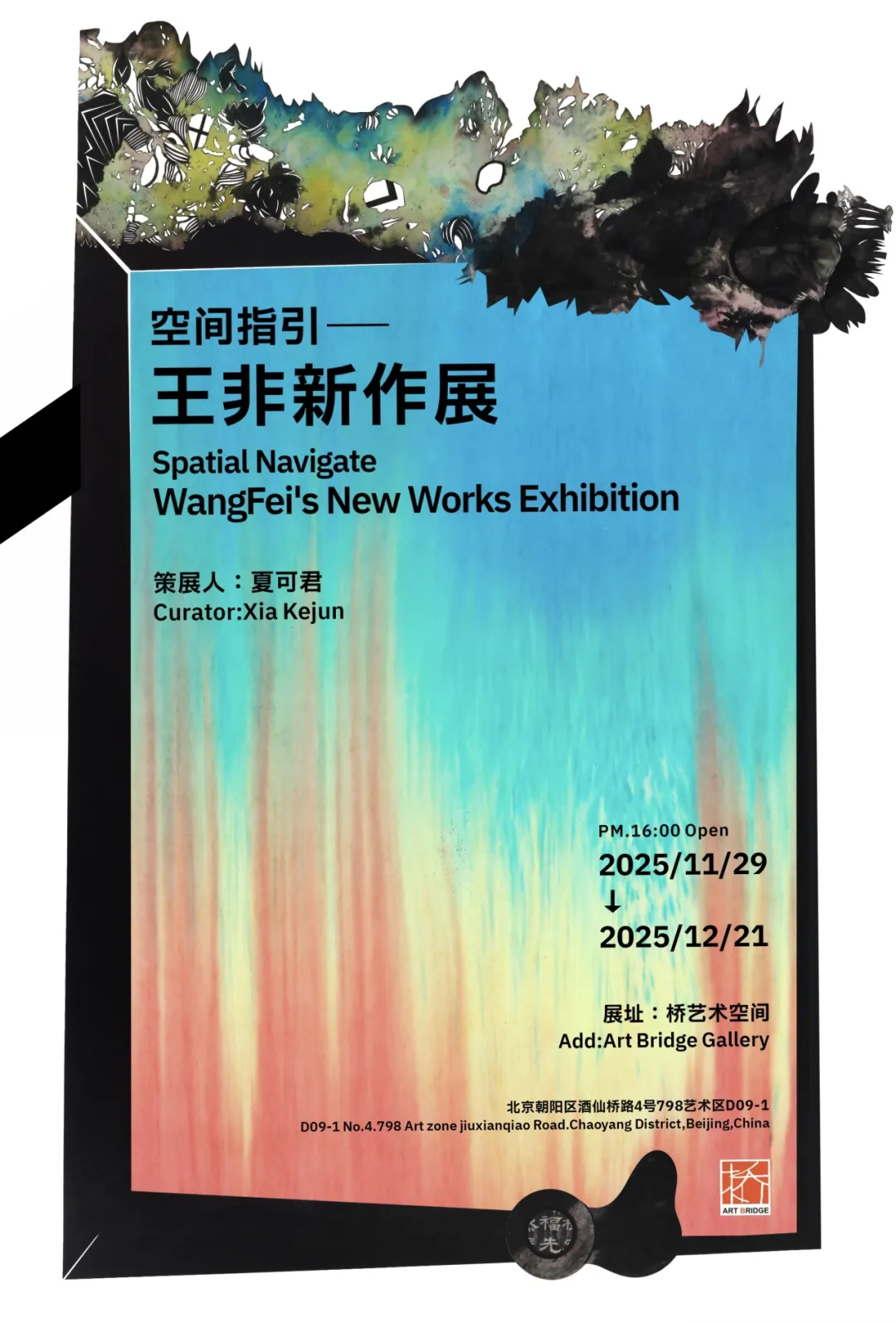
空间指引——王非新作展
Spatial Navigate – Wang Fei’s New Works Exhibition
展期:2025年11月29日—2025年12月21日
开幕:2025年11月29日 16:00
策展人:夏可君
艺术家:王非
地点:桥艺术空间(Art Bridge Gallery)|北京798艺术区D09-1
王非新作展通过三重空间指引,以刀墨裁剪、泼彩等手法,融合文化记忆与当代情感,突破水墨现代性瓶颈,展现空间的自由与神采。Wang Fei’s new exhibition offers spatial navigate through threefold spaces, integrating cultural memory and contemporary emotions with knife-ink techniques and splashed colors, breaking through ink art’s modernity bottleneck to show free and vibrant space.
让空间歌唱,让空间梦想,让空间开花

纸本水墨 Ink on paper
78×58cm 2025年
其一,唤醒儿时家具柜子的立体触感,以其带有魔方与超现实意味的水墨黑块,也是极简主义的情态化,暗示出哀悼的墨意与墨意的哀悼,让水墨获得了生死同时性的张力强度,这也是时代情感的真切表达。
其二,以独特的刀墨裁剪出花饰的镂空分形,如同家具的花边装饰,让水墨与彩墨展现出从未有过的魔幻形态与梦想的空间,让装饰的纹理在怪怪奇奇的变形中打开神秘的所在。
其三,花饰蔓延与繁殖而形成无边的宇宙空间,伴随泼彩的浪漫,绘画获得了神采的洋溢与柔情,平面成为即刻幻化的魔灵舞台,好似Ai的屏幕发出了美妙的咆哮。
这三重空间还在艺术家魔法般的手艺中旋转折叠,在方型与椭圆之间不断交叉,在黑色与金色之间,开花的老虎歌唱出水墨艺术从未有过的神采,带有宇宙梦幻的飞扬神采。

纸本水墨 Ink on paper
270×133cm 2023年

纸本水墨 Ink on paper
209×205cm 2025年
王非的新作展示出一条水墨当代转化与国际化的道路:它不再局限于对象与图像以及所谓的笔墨工夫,而是把一切的修养都转向空间与时间的纯粹表达,材质的独特性与文化的记忆只能在个体艺术家纯粹空间的枝丫上重新生长。这也是王非的绘画,在空间的分形与翻转的魔法中,所体现出来的想象的神秘与色觉的神采。
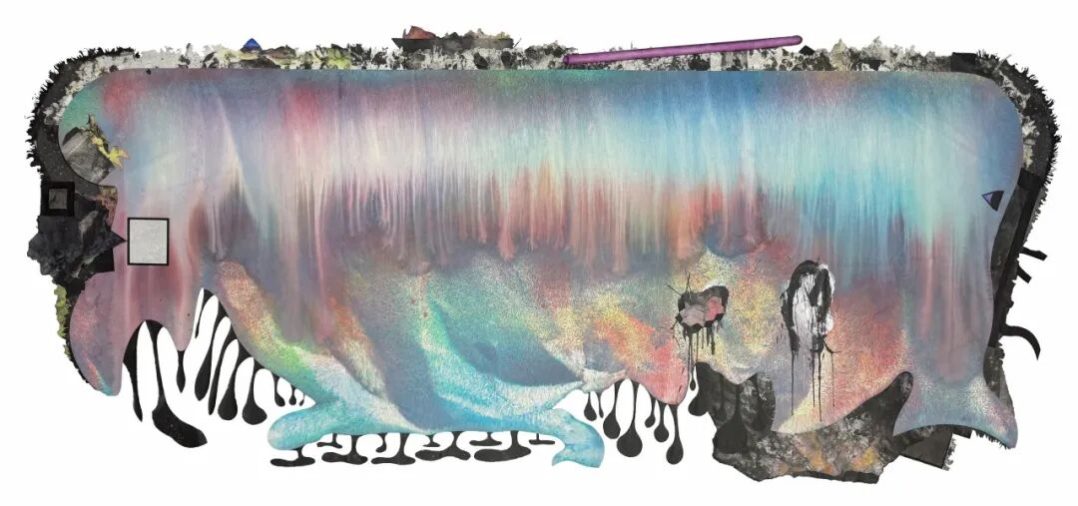
纸本水墨 Ink on paper
550×280cm 2024-2025年
Let Space Sing, Let Space Dream, Let Space Bloom
Wang Fei’s paintings over the past five years have formed a triple spatial navigate:
First, it evokes the tactile depth of childhood furniture cabinets through its ink-black blocks imbued with Rubik’s Cube and surrealist connotations—a minimalist expression that suggests mournful ink and ink-laden mourning. This lends ink painting a tension that simultaneously embraces life and death, serving as an authentic expression of contemporary sentiment.
Second, unique knife-ink techniques carve out openwork fractal floral patterns, reminiscent of furniture lacework. This allows ink and color to manifest unprecedented magical forms and dreamlike spaces, where decorative textures unfold mysterious realms through bizarre, grotesque transformations.
Third, floral motifs proliferate into boundless cosmic expanses. Accompanied by the romanticism of splashed color, the paintings radiate vibrant spirit and tender emotion. The flat surface transforms into an instantly morphing stage for magical spirits, as if AI screens emitted a magnificent roar.
These threefold spaces continue to rotate and fold within the artist’s magical craftsmanship, constantly intersecting between squares and ovals, between black and gold. The blooming tiger sings of a vitality never before seen in Ink-art.
The triple space of Wang Fei’s works, with its high-dimensional spatial imagination, allows the long-standing cultural and historical memory to secretly undulate and mysteriously reorganize within it. The pictorial memories of ancient China’s Classic of Mountains and Seas and Sanxingdui overlap with the ethereal mountain visions of medieval pottery figurines and Boshan incense burners. ghostly masks emerge from the crevices of Ming-style furniture, only to be folded into the organology of contemporary technological machinery. Desire machines and breathing machines are collaged into nine-tiered demon towers—wondrous spectacles or alien realms. Yet the overall perception remains suspended between Ruin and Splendor, or Brocade and Ash. This grants powerful visual expression to the late Qing concept of “Piles of Brocade and Ash”—China’s quest for modern transformation since the late Qing era. It liberates Chinese ink wash painting from its own confines, initiating a purely spatial guidance that allows spiritual energy to manifest in infinitely unfolding, exquisite forms.
The navigate of space is the endless openness of space: let the space fly, let the space breathe, let the space bloom, let the space face life and death, let the space bloom with the warmth of craftsmanship, let the space sing in color, let the space travel through ghosts and brightness, what kind of free art is this!
Wang Fei’s new works demonstrate a path for the contemporary transformation and internationalization of Ink painting: transcending the confines of subject matter, imagery, and so-called brushwork techniques. Instead, all artistic cultivation is redirected toward the pure expression of space and time. The uniqueness of materials and cultural memory can only regrow on the branches of the individual artist’s pure spatial realm. This is also what Wang Fei’s paintings embody—the mystique of imagination and the brilliance of color perception, manifested through the fractal divisions and magical inversions of space.