伺视而非:绘画本体的或然空间
Observing the Unapparent: The Contingent Space of Painting’s Ontology
展期:2026年01月31日—03月15日
策展人:高江波
艺术家:Asa X陈竺、草人火、陈伟潮、丛野、大粒、黑一烊、李芃澎、黎欣欣、李扬、李琢恒、林枞、林植、刘养闻、雷童、罗熹、孟思特、孟阳阳、潘泽嘉、苏华、孙宇、王克英、王亚强、姚朋、杨工业
主办:有边空间
地点:有边空间|北京市朝阳区酒仙桥路2号798艺术区D-06
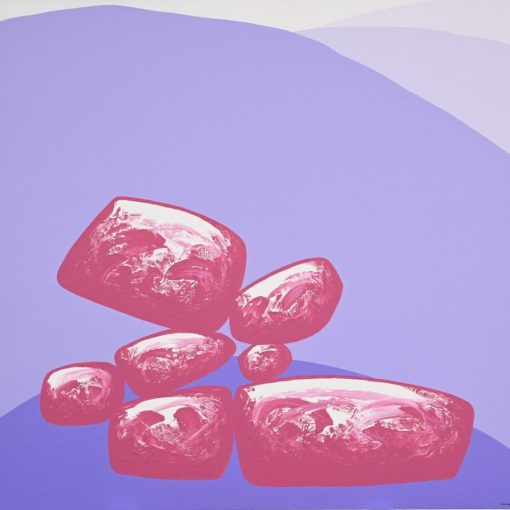
有边空间群展「伺视而非」聚焦绘画本体或然空间,借“观测者效应”探讨技术冲击下绘画的可能性,呈现24位艺术家作品,展现笔触、颜料等肉身痕迹中的创造性瞬间。The group exhibition “Watching but Not: The Probable Space of Painting Ontology” at BOUNDED SPACE explores the possibilities of painting under technological impact through the “Observer Effect,” presenting works by 24 artists to show creative moments in physical traces like brushstrokes and pigments.لمعرض الجماعي “الملاحظة لكن ليس: الفضاء المحتمل لجسد الرسم” في BOUNDED SPACE، يستكشف إمكانيات الرسم تحت تأثير التكنولوجيا من خلال “تأثير المراقب”، مع عرض أعمال 24 فنانًا لتبليغ اللحظات الإبداعية في آثار جسدية مثل الحركات الفرشية والألوان.
有边空间BOUNDED SPACE荣幸宣布,将于1月31日呈现群展「伺视而非:绘画本体的或然空间」。展览由高江波担任策展人,孙宇航担任执行策展人。
前言
作为物理学发现的“观测者效应”(Observer Effect),近年来已逐渐被社会学、认知心理学等学科纳入并借用。这个原本用以描述“意识作用于物质”的词汇,如今已泛化为一种“自我审视”与“镜像确认”的象征。“伺”在动作层面便暗示着小心翼翼的注视,近似一种在距离与亲密之间摇摆的下意识;“视”则是图像时代下“观看阳痿”的症候,是与绘画签订且被强制执行的双重契约——既构建可辨识的形态,又守护形态之下的模糊。
在算法能够模拟任意风格的今天,绘画正经历新一轮的震颤与摇摆,恰似彼时被摄影术发明所冲击的沙龙艺术。但如今的境况,早已不止于绘画乃至艺术的自察,而是在大众文化、技术冲击、媒介语法这一众“观测者”的督从下,所展开的深度猛省。这一系列炼金术般的还原反应,让绘画从消费到创造的每个链条,都必须直面一个核心问题:脱离了叙事与表意的“绘画本体”,到底还能炼出多少金两?
本次展览将聚焦物理学中“观测”意象的本初语境,以“意识如何作用于物质”(观察者效应下的“波粒二象性”)为核心隐喻,同时将其在心理学、社会学乃至当代艺术领域的拓展,一并纳入绘画本体的可能性讨论。相较于屏幕与印刷,绘画先天保有的“不完美的权利”,恰恰成为了问题本身:它们允许自己既像某物,又同时保有不像的自由;既提供视觉的路径,又悄悄拆除这些路径的路标;既被图像奴役,又挣脱公转的桎梏;既重视人本,却又最先拥抱技术……这究竟是“否定”还是“补充”?是认知地图上突然显现的空白地带,还是绘画的穷途末路?
不妨重回笔触的呼吸、颜料的堆积、底材的肌理——这些肉身动作的痕迹之中,藏着一次次“或许这样,或许那样”的创造性瞬间。这或许正是“绘画本体”那充满可能的多歧岔路?亦是“而非”这一“健康的犹疑”,于此刻降临的确信?
文/高江波
BOUNDED SPACE is honored to announce the group exhibition “Observing the Unapparent: The Contingent Space of Painting’s Ontology”, which will be presented from January 31 to March 15, 2026. The exhibition is curated by Gao Jiangbo, Sun Evelyn as the executive curator.
Foreword
The Observer Effect, a concept originating in physics, has been increasingly adopted and adapted by disciplines such as sociology and cognitive psychology in recent years. Originally describing how consciousness acts upon matter, this term has been generalized into a symbol of self-examination and mirror confirmation.
The Chinese character Si (伺) implies cautious watching, a subconscious wavering between distance and intimacy. Shi (视) reflects the symptom of visual impotence in the image age—a dual binding contract with painting: constructing recognizable forms while safeguarding the ambiguity beneath them.
Today, as algorithms can simulate any artistic style at will, painting is experiencing a new wave of tremors and vacillations, much like salon art was impacted by the invention of photography. Yet this predicament is no longer merely a self-reflection of painting or even art itself; it is a profound awakening driven by a host of observers including popular culture, technological disruption, and media syntax.
This series of alchemical reduction reactions forces every link in painting—from consumption to creation—to confront a critical question: how much value can the ontology of painting yield when stripped of narrative and representation?
This exhibition centers on the core metaphor of the concept of observation in its original physics context: how consciousness acts upon matter (the wave-particle duality under the Observer Effect). It also incorporates the extension of this concept in psychology, sociology and contemporary art into the discussion of the possibilities of painting’s ontology.
Compared with screens and printing, painting’s inherent right to imperfection becomes the question itself: It allows the freedom to resemble something yet remain dissimilar; to offer visual paths while quietly removing their signposts; to be enslaved by images yet break free from their orbit; to prioritize humanism yet embrace technology first. Is it negation or supplementation? A sudden blank space on the cognitive map, or the end of painting?
Let us return to the breath of brushstrokes, the accumulation of pigments, the texture of substrates—the traces of physical gestures, and those creative moments of “maybe this, maybe that”. Perhaps this is the branching, contingent crossroads of painting’s ontology? And the certainty that emerges here and now from the “healthy hesitation” embodied in “otherwise”?
By Gao Jiangbo