
凯特琳娜·翁德鲁什科娃:蓝绿色的眼睛
Kateřina Ondrušková: Blue-Green Eyes
展期:2025年01月18日—02月22日
艺术家:凯特琳娜·翁德鲁什科娃(Kateřina Ondrušková)
地点:Double Q画廊|香港上环乐古道68号
翁德鲁什科娃的个展“蓝绿色的眼睛”呈现2024年创作的最新系列绘画,探讨自然与人类情感的交织,通过色彩与技法展现复杂而亲密的心理空间。
凯特琳娜·翁德鲁什科娃(Kateřina Ondrušková)在Double Q画廊的首次个展《蓝绿色的眼睛》(Blue-Green Eyes)呈现了她在2024年创作的最新绘画系列。展览标题本身就唤起了感知的双重性——蓝色象征内心的忧郁与不安的反思,绿色则是生命的象征,代表着包容一切的大自然和有机循环。这两种视角一直是画家看待世界的方式。这种双重性不仅体现在她所使用的色彩和技法中,还体现在她作品的情感和概念层面,将自然与她对世界的个人感受联系在一起。对自然、记忆和人类情感的沉思探索一直是她作品的核心。
翁德鲁什科娃展出的画作场景深深植根于自然主题,但又超越了简单的自然表现。花园、湿地和湖泊代表了一种完美的环境,邀请人们去采摘花朵、享受宁静的独处、休息或不受打扰地观察嗡嗡作响的生命——渴望停留、徘徊并与周围的一切融为一体。然而,当我们在画面中注意到与各种动物物种相伴的人类形象时,场景便拥有了自己的叙事。事实上,这些画布从单纯的风景镜像转变为解读人类体验的心理空间,这种体验往往更为复杂和亲密。
翁德鲁什科娃的画布色调和质感以对情感细微差别的敏感处理。独特的笔触、颜料的刮擦以及最后的喷漆层,以一种我们生活或重温这些场景的生动和呼吸活力的方式构建了画面。可见与不可见之间的游戏是翁德鲁什科娃作品的一个重要部分——人物、动物和植物在透明的层次中出现和消失,暗示了记忆和经历的短暂性。这种柔和化也强调了现象的交织、它们的多层性和频繁的模糊性。尽管叙事存在,但它们总是部分未被言说。

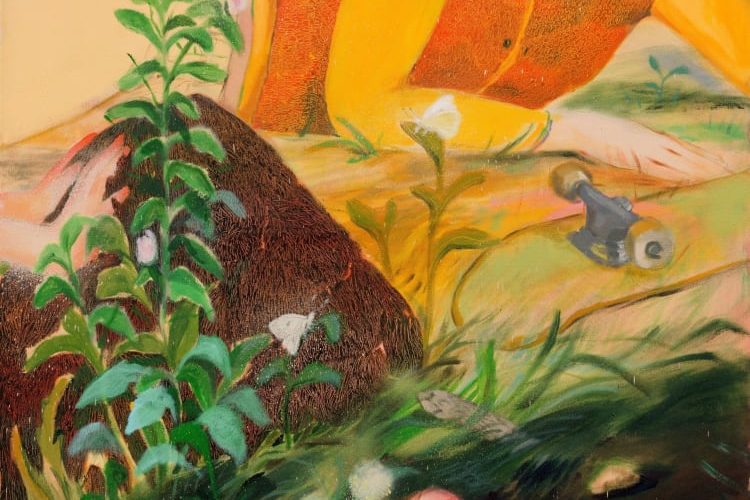
一个很好的例子是《蚁丘》这幅画。画中描绘了充满活力的青春的易变性,与一个未知人物将手掌放在繁忙的蚁丘上的平静对比。这与一个古老的(或许是波西米亚?)传统有关,据说这种行为可以为执行者带来永恒的青春和生育能力。这种人类的不同时间性与自然事件的相遇,其中群体比个人的生命历程更重要,通过蝴蝶的描绘得到了增强——蝴蝶是轻浮而脆弱的生物,通常活不过一个月。
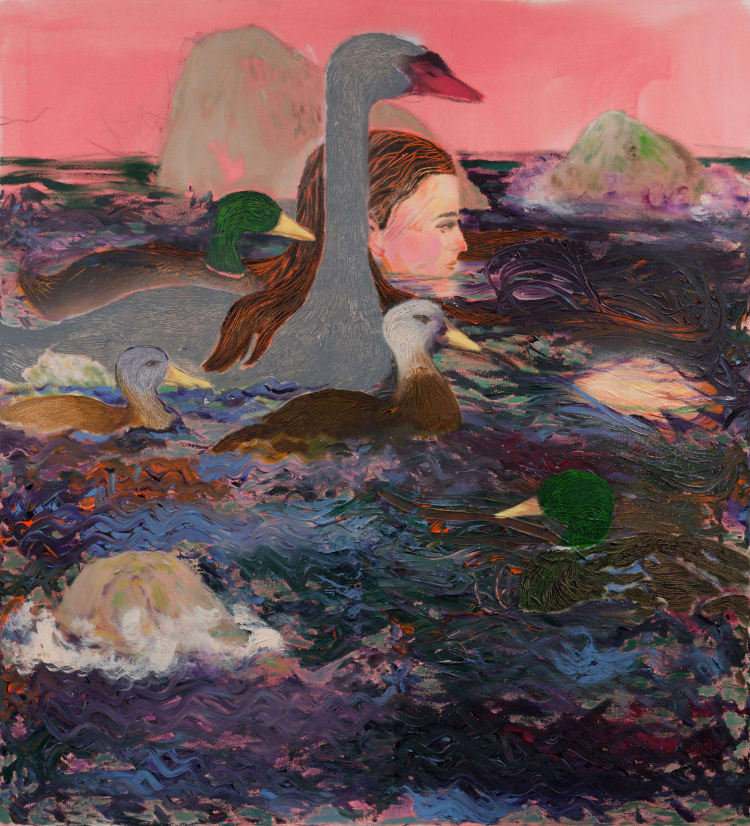
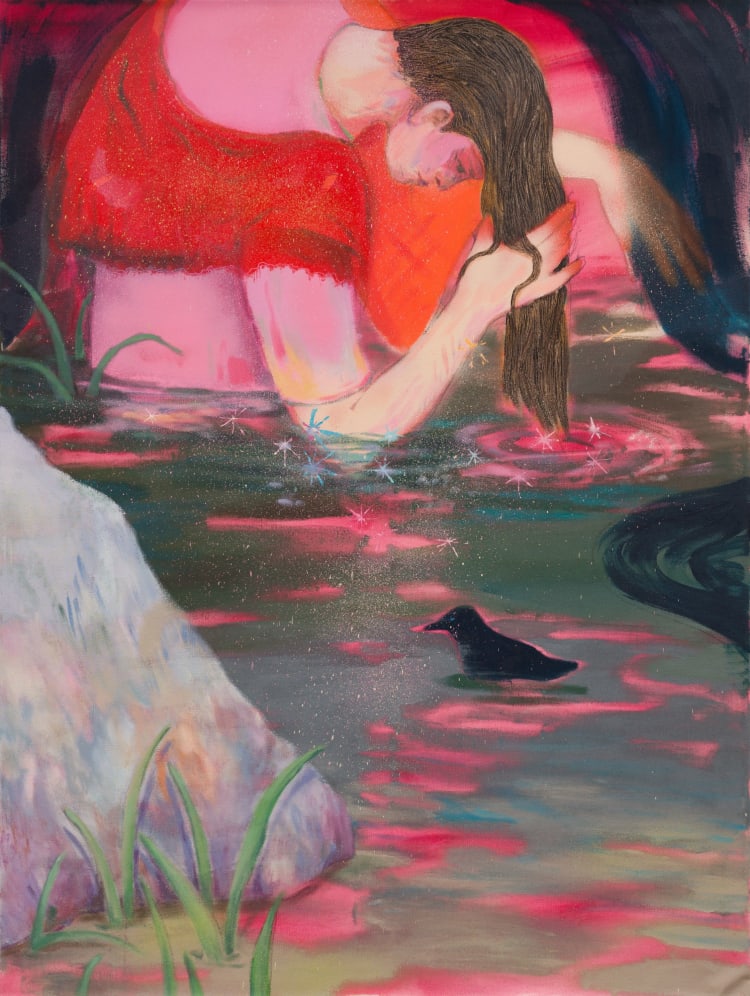

在翁德鲁什科娃的其他画作中,其他飞行动物,通常是水鸟,出现在阴暗或黑暗中。《守卫》这幅画描绘了一位游泳的女性,她被一群水鸟陪伴着,引导她沿着水流的方向前进。动物、河流和人类合为一体——一方掩盖并保护着另一方。事实上,在几幅画中,我们还可以找到人类最亲近的动物伙伴——狗。昼夜的交替也是这一系列绘画的重要组成部分。《洗发》这幅作品几乎是仪式性地窥视了照顾自己身体的私人时刻,当一个人再次融入另一个中,呈现出一种夜间、近乎魔幻的色调。而《湿地》这幅画则描绘了一对年轻情侣在现代性与古老自然之间的矛盾——发光的帽子进入视野,同时唤起了躺在潮湿土壤上的舒适感。
翁德鲁什科娃作品中绘画时刻的颜料刮擦也暗示了我们与周围世界的关系这一更广泛的问题。这在人物的头发、植物的叶子或蛞蝓的身体(《妈妈的发夹》)中尤为明显。这种绘画手法再次被艺术家感知为关注统一能量的流动以及所有生物中固有的普遍形状的重复。翁德鲁什科娃作品中的人物仿佛既属于这个世界又置身于世界之外。在诸如《草地》这样的梦幻画作中,展现了更多关于各种情感的描绘。这最终由《蓝绿色的眼睛》这幅画强调,它暗示了看到自然就是看到其中的自己。
凯特琳娜·翁德鲁什科娃的展览是对观看和体验行为的集中反思。这些绘画作品以其层次丰富的质感和丰富的调色板,唤起了事物的相互联系,并邀请我们更仔细地观察,并停留在我们暂时停顿的那一刻出现的空间中。


Kateřina Ondrušková’s first solo exhibition for Double Q, Blue-Green Eyes, presents the latest series of paintings created during 2024. The title of the exhibition itself evokes the duality of perception – blue as the colour of inner melancholy and restless reflection, green as a symbol of life, all-encompassing nature and organically controlled cycle. These two positions are the way through which the painter has long viewed the world. This duality then resonates not only in the colour palette and techniques she uses, but also in the emotional and conceptual layers of her work, which links nature and her personal feel of the world. Contemplative exploration of nature, memories and human emotions has long been inherent in her work.
The scenes of Ondrušková’s displayed paintings are deeply rooted in the motifs of nature, but at the same time they go beyond its simple representation. The gardens, wetlands and lakes represent a kind of perfect environment that invites to pick flowers, moments of quiet solitude, rest or undisturbed observation of the buzzing and humming – the desire to dwell, linger and blend in with everything around. However, the scenes are imbued with their own narratives the moment we notice the human figures that often accompany the various species of animals. All of this, in fact, transforms the canvases from mere mirrored landscape paintings into scenes interpreting the mental space of human experience, which is often much more complex and intimate.
The tones and textures of Ondrušková’s canvases are processed with the aforementioned sensitivity to their emotional undertones. The distinctive brushstrokes, the scraping of paint and the final use of spray paint layer the compositions in exactly the way we live or relive the vibrant and breathing vitality of these scenes. The play between the visible and the hidden is therefore an important part of Ondrušková’s work – figures, animals and plants appear and disappear in transparent layers, alluding to the fleeting quality of memories and experiences. This softening also emphasizes the intertwining of phenomena, their multiple layers and frequent ambiguity. Although narratives are present, they always remain partially unspoken.
A good example is the painting Anthill. The volatility of exuberant youth is depicted in a calm contrast to the teeming anthill in which the unknown figure lays their palms. This is linked to an old (perhaps Bohemian?) tradition according to which this act is supposed to ensure eternal youth and fertility to the one who does so. This meeting of different human temporalities with natural events in which community is more important than the individual life journey is enhanced by the depiction of butterflies, flighty fragile creatures that often do not survive more than one month.
Other flying animals, often water birds, appear in the gloom or darkness in Ondrušková’s other paintings. The painting Guards shows a swimming woman accompanied by a whole flock that leads her in the direction of the water flow. Animals, the river and human beings merge into one – one masks and protects the other, in fact, in several canvases we can also find humans’ closest animal partner, the dog. The alternation of day and night is an important part of this series of paintings. The work Hair Washing is an almost ritualistic glimpse into a private moment of taking care of one’s own body, when one dissolves into the other again, in a nocturnal, almost magical tonality. The canvas Wetlands, in turn, depicts a young couple in the ambivalence of modernity and age-old nature – the phosphorescent cap beats into view, along with an empathy for how comfortable it would be to lie down in the damp soil.
Broader questions about our relationship to the world around us are also suggested by the use of paint scraping in the drawing moments of Ondrušková’s work. This is particularly evident in the hair of the characters, the leaves of plants or the body of a slug (Mom’s Hair Clip). This painterly gesture can again be perceived by the artist as placing attention on the flow of unified energy and the repetition of universal shapes inherent in all living things. The characters in Ondruskova’s work dissolve as if they were simultaneously part of the world and outside of it. There is more of a depiction of various emotions in the reverie of paintings such as the pastel Meadow. This is ultimately underlined by the canvas Blue-Green Eyes, which suggests that to see nature is to see oneself in it.
Kateřina Ondrušková’s exhibition is thus a concentrated reflection on the act of seeing and experiencing. The paintings, with their layered textures and rich palette, recall the interconnectedness of things and invite us to look more closely and remain in the space that emerges when we momentarily pause.,Double Q Gallery,
地址: 上環樂古道68號
營業時間: 週三至週六 11am–7pm; 週一、週二僅限預約
電話: +852 3797 2922


