
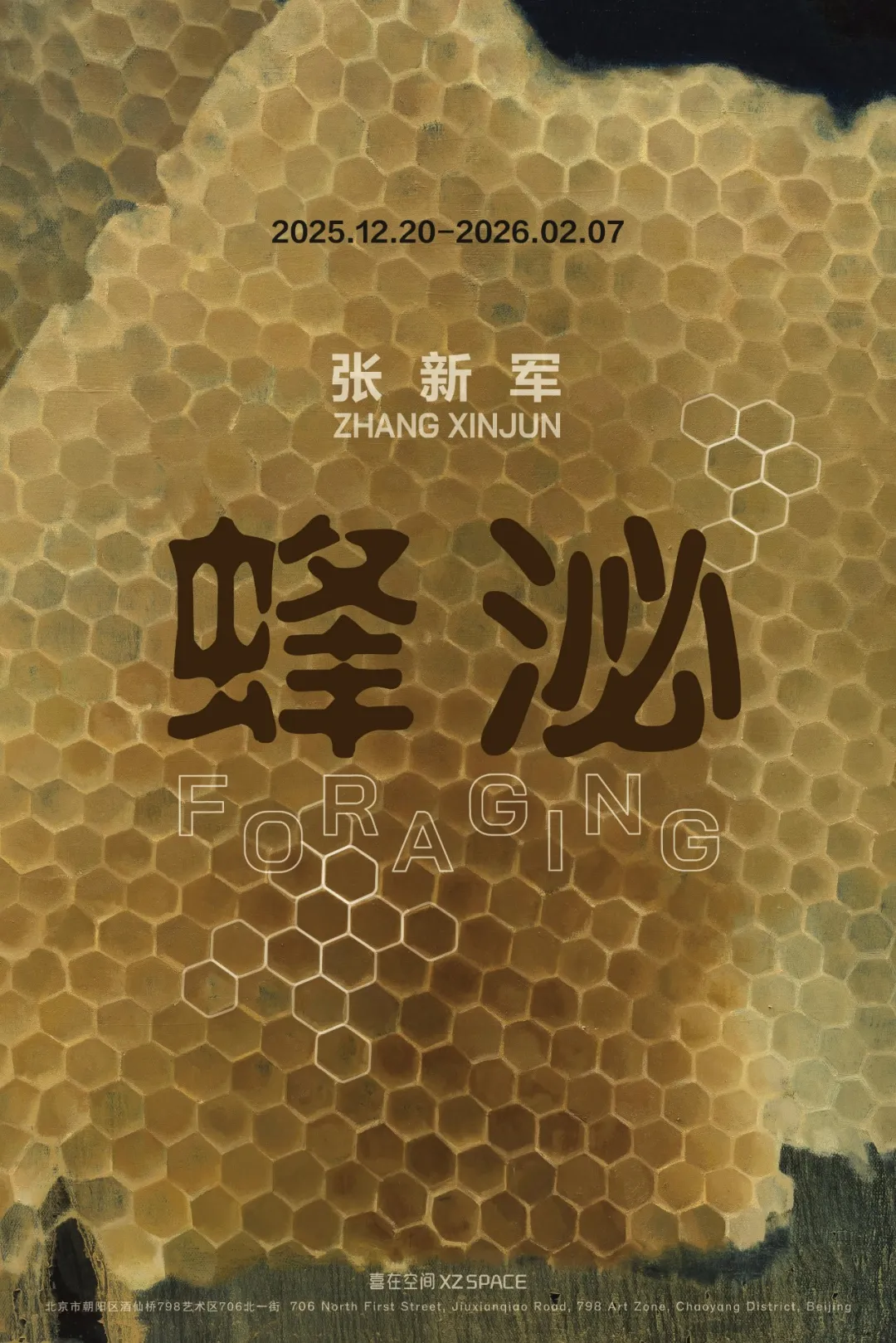
张新军:蜂泌
Zhang Xinjun:Foraging
展期:2025年12月20日—2026年2月7日
艺术家:张新军
地点:喜在空间(XZ SPACE)|北京市朝阳区酒仙桥路798艺术区706北一街
此次展览以“蜂泌”借指工蜂筑巢过程,隐喻艺术创作的劳作转换,探讨基层劳动者的负重与艺术实践中的身体感,呈现张新军对生命体验与社会生态的思考。The exhibition uses “foraging” as a metaphor for artistic creation, exploring grassroots workers’ burdens and physicality in art practice, presenting Zhang Xinjun’s reflections on life experience and social ecology.
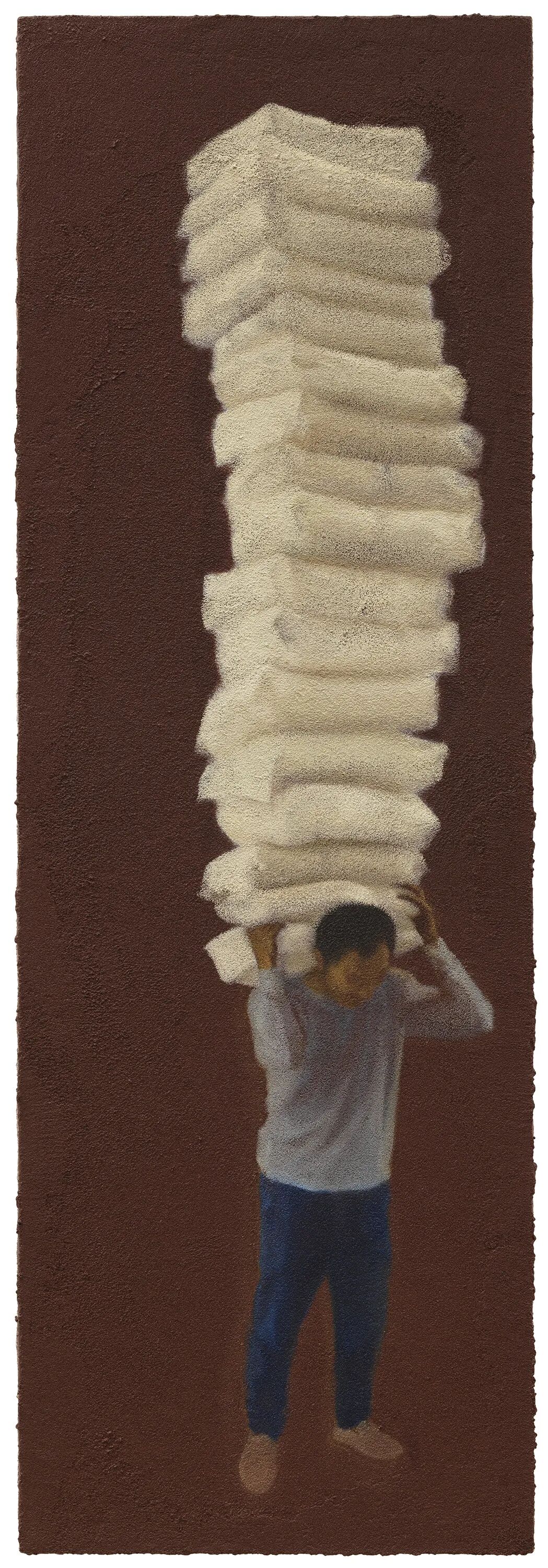
张新军 Zhang Xinjun
白塔 White Tower
布面油画 Oil on canvas
150×50cm
2025
The exhibition takes foraging—the ceaseless labor of worker bees building their hive—as both metaphor and method, mirroring the transformative work of artistic creation. A hive, after all, is a biological architecture: thousands upon thousands of wingbeats, the soft grinding of beeswax, and the quiet choreography of collective effort. Its hexagonal chambers form a structure both resilient and orderly, a container that is also a portrait of a deeply social organism. Within a colony, worker bees comprise over ninety-five percent of the population, sustaining nearly every task necessary for survival and growth. In the expanding grids of contemporary cities, countless grassroots workers echo this worker-bee collective, keeping vast systems in motion. Beyond their own bodily weight, bees returning from the fields often carry pollen nearly equal to their mass. And even in an age shaped by algorithmic feeds, physical labor—gathering, lifting, transporting—continues alongside the quiet endurance of those who sit for long hours before screens, bearing psychological burdens rather than material ones. Artistic practice, too, is part of life’s labor. Through repetition, one may arrive at a place where effort becomes effortless—or discover that the next added weight is the final straw. In his work, Zhang Xinjun attends closely to physical sensation. In a time ever more digitized and virtualized, this return to the body becomes a fundamental channel for encountering the world. At moments, even modest physical exertion grants a steadiness of mind. Through movement, the body converts perception and thought into a kind of secreted substance—materialized spiritual nourishment. Dissolving in one form across time and space, it re-emerges in another, growing again.


