
童昆鸟:浪卷黄昏后
展期:2025年08月30日—10月18日
开幕:2025年09月11日 17:00
艺术家:童昆鸟(Tong Kunniao)
地点:户尔空间|德国柏林波茨坦大街81B,D-10785
户尔空间呈现童昆鸟个展,汇集其绘画精选,改造空间营造沉浸式场域。灵感源自《海水旭日图》,以棉花覆盖地面、玻璃施海浪纹样,映现动荡时代心境。Hu’er Space presents Tong Kunniao’s solo exhibition, featuring selected paintings and transforming the space into an immersive field. Inspired by “Sea Water and Rising Sun”, it covers the floor with cotton and applies wave patterns on glass, reflecting the mood in turbulent times.
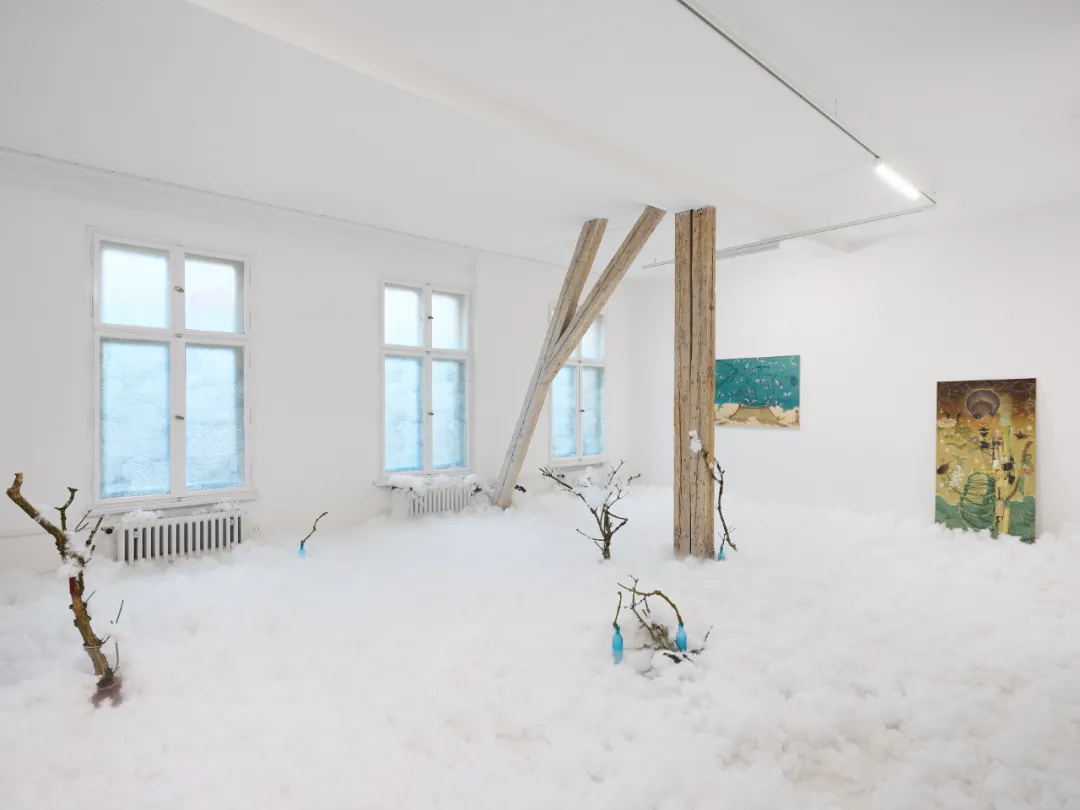
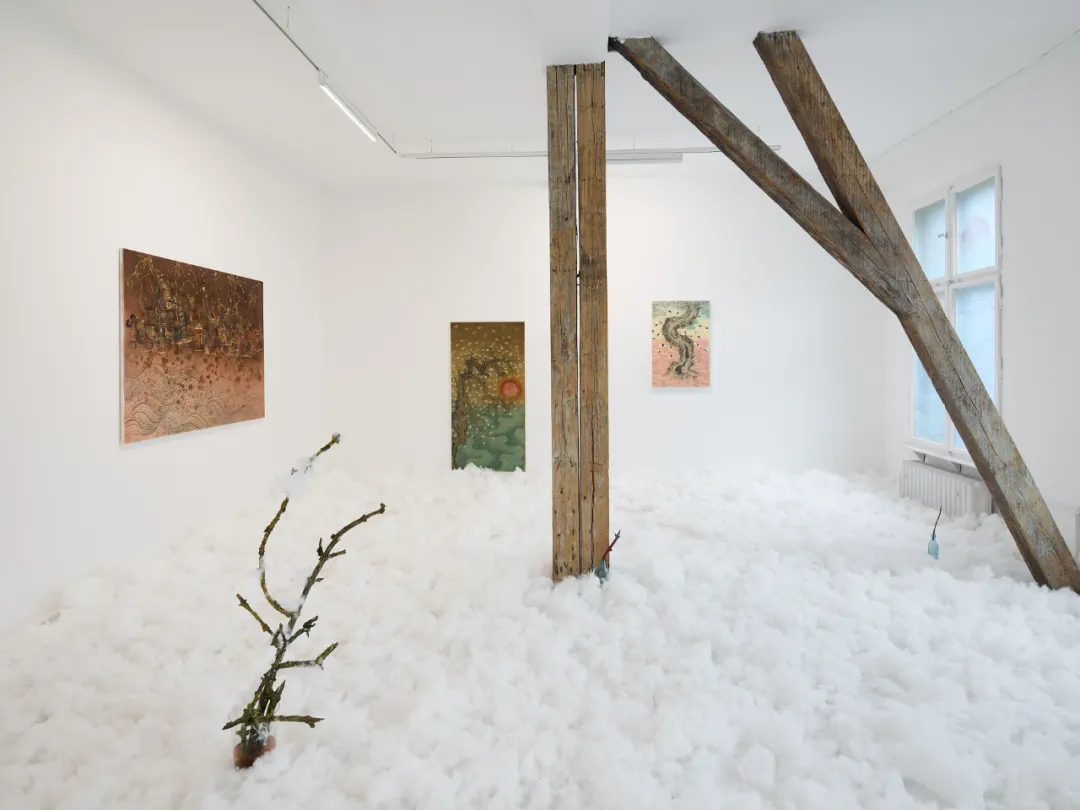
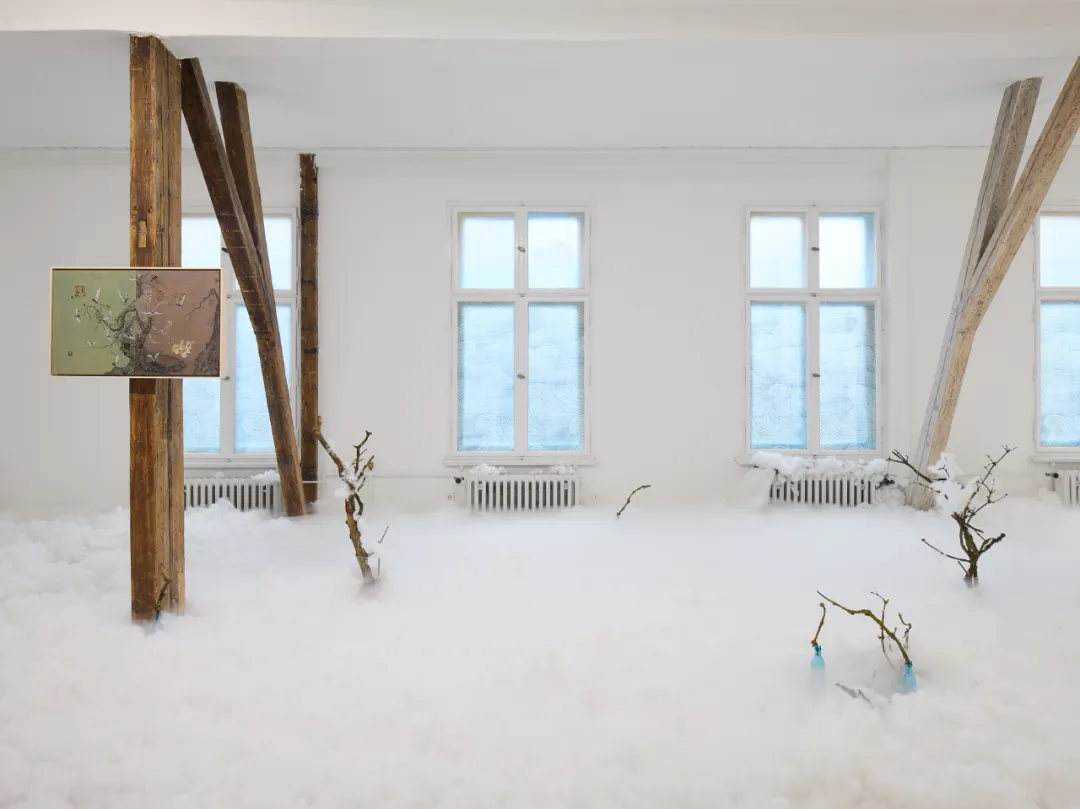
户尔空间将于柏林艺术周期间很荣幸地为您呈现中国艺术家童昆鸟的个展《浪卷黄昏后》。展览汇集了童昆鸟持续创作的绘画系列精选作品,并对画廊空间进行全新改造,在细微之处改变了画廊的内部与窗户,使观众置身于一个充满自我投射与氛围的场域之中。
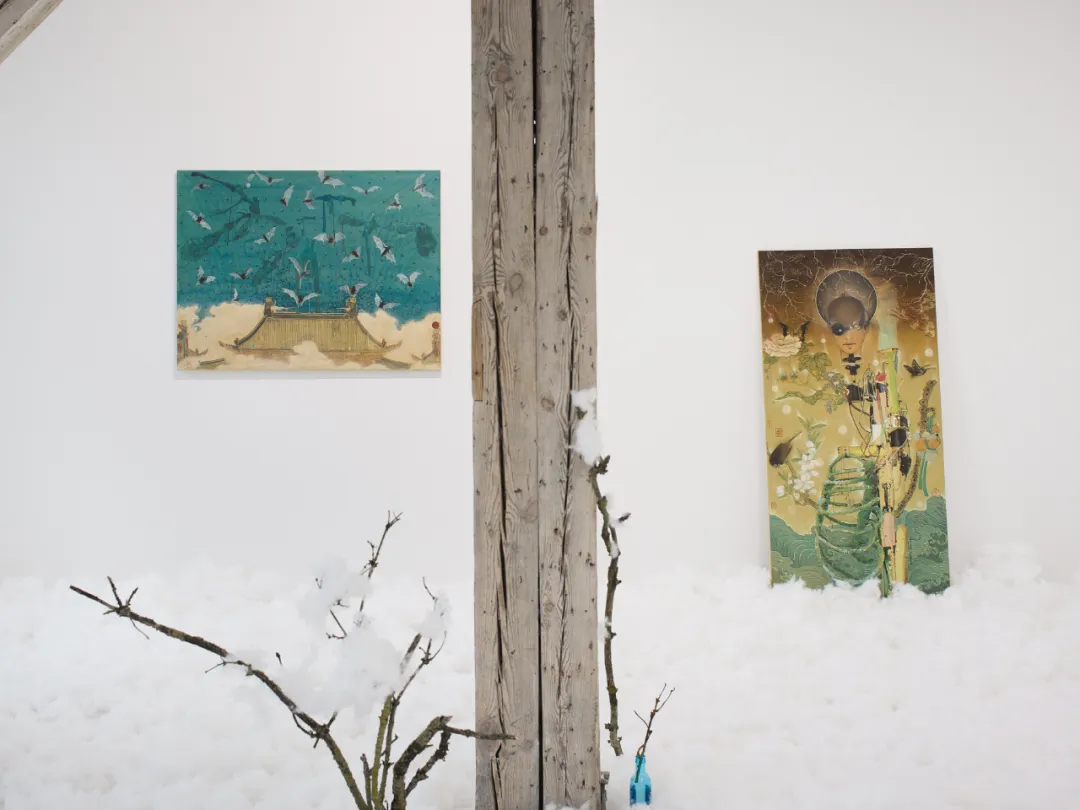
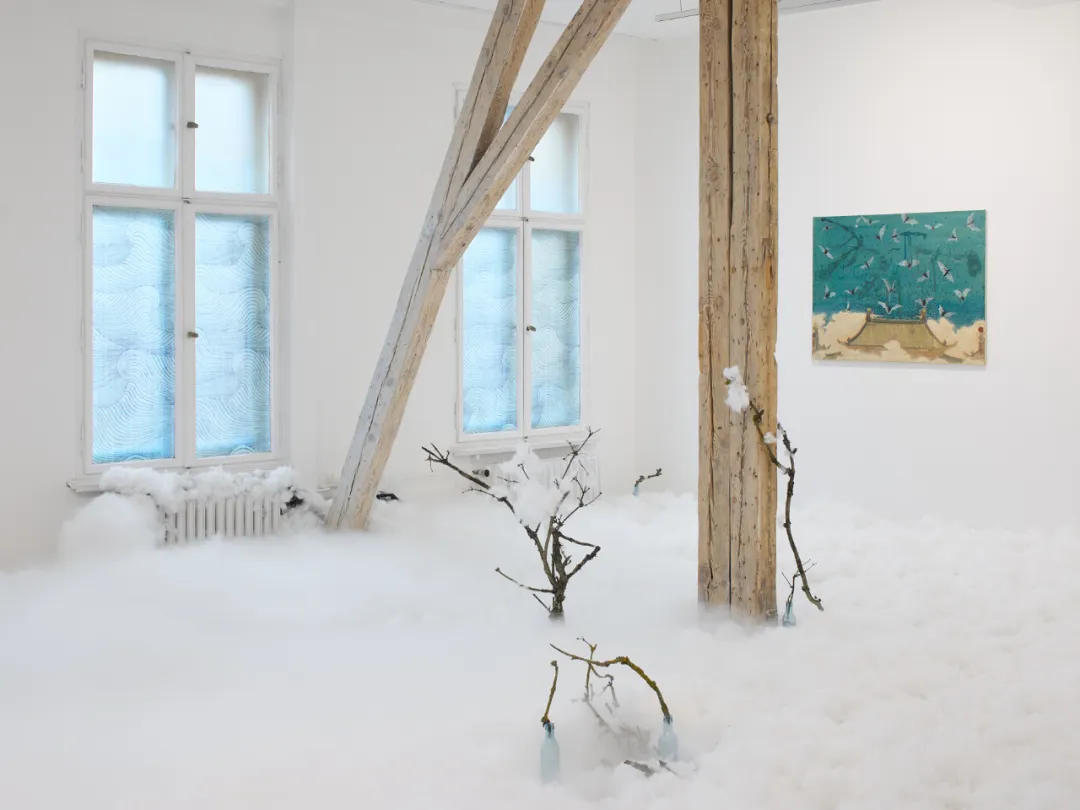
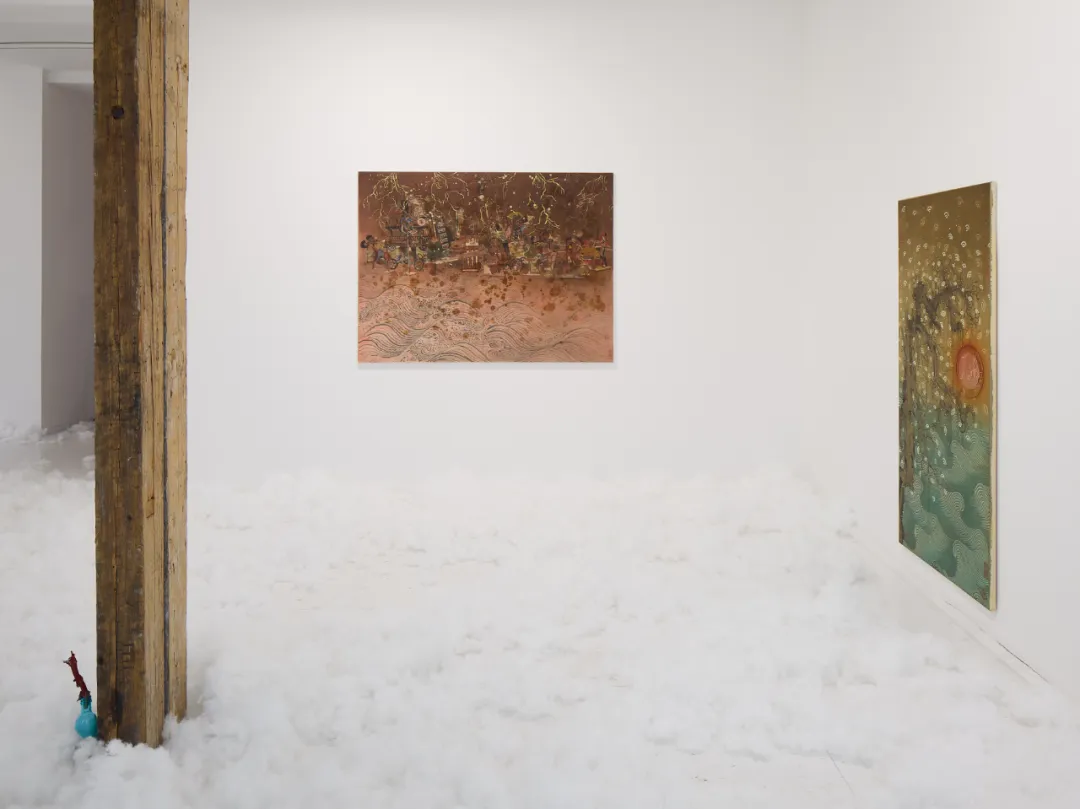
灵感源自明代画家戴进的《海水旭日图》。艺术家以棉花覆盖整个展厅地面,并在玻璃上施以海浪纹样,将空间在视觉上延展至室外,透过带有图案的玻璃,宛如海面上浮现的海市蜃楼。对艺术家而言,这一幻象映照着他的心境,在动荡的全球格局中,全球化的时代似乎已然退潮,暮色降临,而未来仍被迷雾与未知所笼罩,如同地平线上若隐若现的远景。
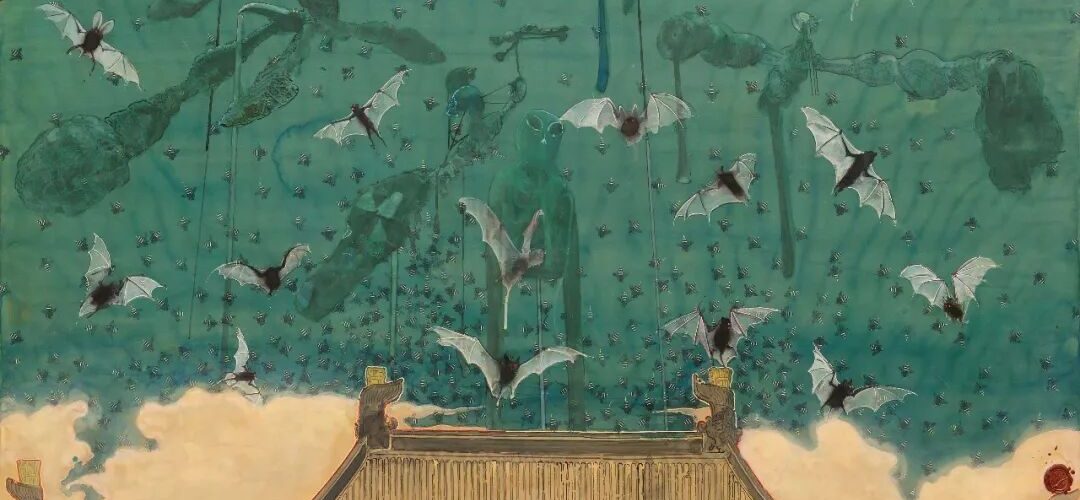
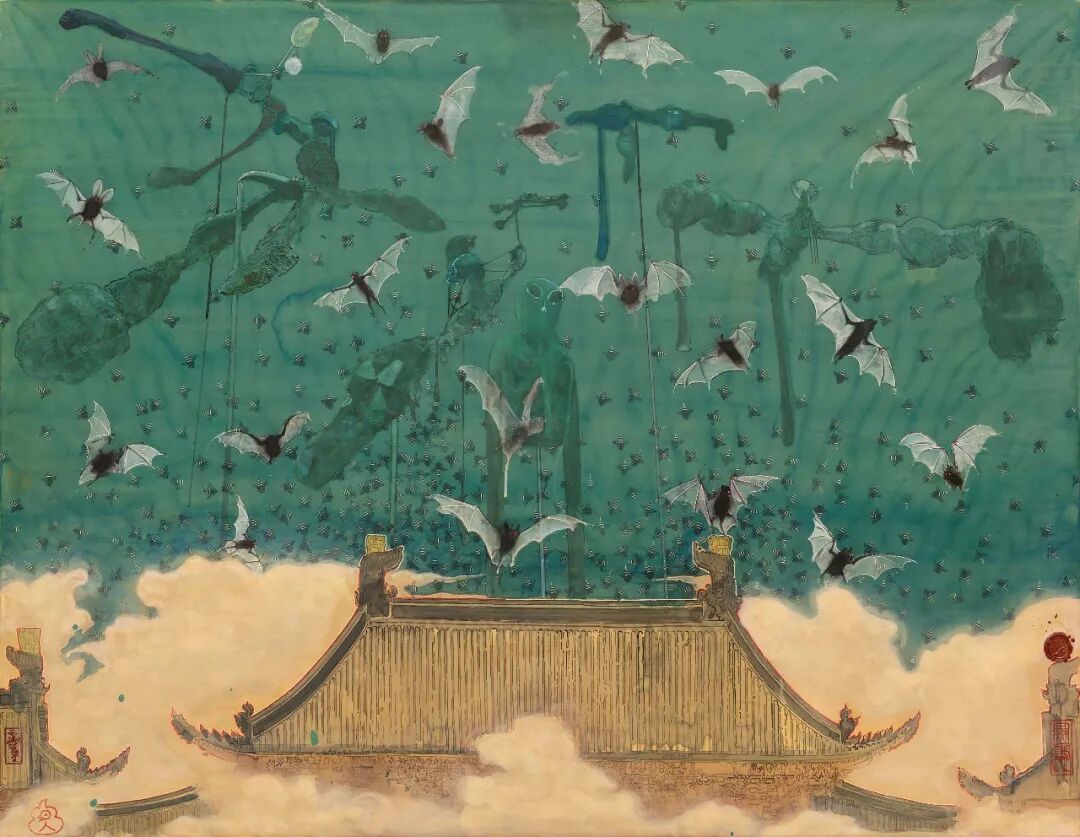
童昆鸟绘画的情感力量贯穿于多样的主题之中,古老的生物、未来的机械人、历史建筑与当代环境,共同构成了一幅属于当下的群像。作品既传递出不安,也展现出一种静默的韧性,在黑暗与光明、过去与未来、恐惧与希望之间维持着微妙的平衡。
Hua International is pleased to present After the Waves and the Dusk, a solo exhibition by Chinese artist Tong Kunniao, on view during Berlin Art Week. The exhibition unites selected paintings from Tong’s ongoing series with a new spatial transformation that subtly transforms both the gallery interior and its windows, immersing visitors in a reflective, atmospheric space.
Inspired by Seawater and Rising Sun, a classical Chinese painting by Ming dynasty master Dai Jin, Tong covers the gallery floor with cotton and applies sea wave motifs to the windows, visually extending the work outdoors. Through the patterned glass, visitors can glimpse the building across the street, like a mirage shimmering above the sea. For the artist, this mirage mirrors his own state of mind—set against today’s unsettled global climate, it feels as though the era of globalization has receded and dusk has fallen. Yet the future remains cloaked in mist and mystery, like an elusive vision on the horizon.
The emotional tenor of Tong’s paintings emerges through a tapestry of subjects—ancient creatures, futuristic cyborgs, historic architecture, and contemporary environments—forming a kind of group portrait of our time. While charged with unease, the works also carry a quiet resilience, holding contradictions in tension: darkness and light, past and future, fear and hope.
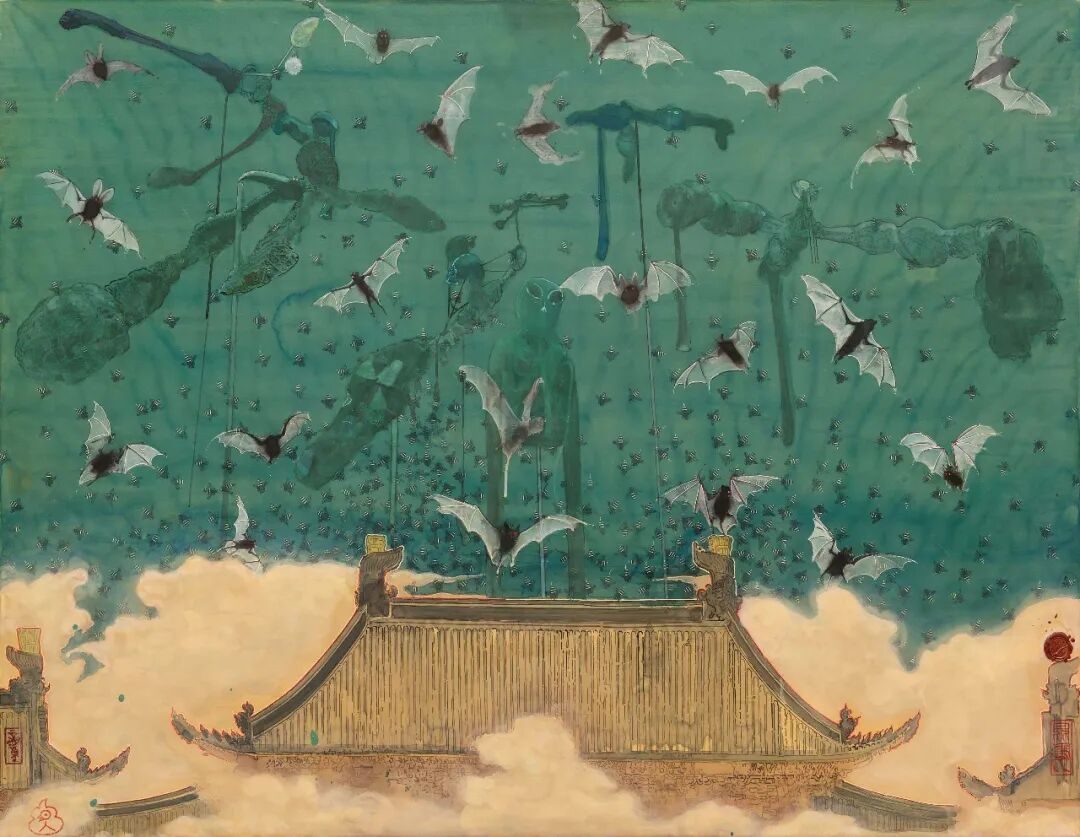
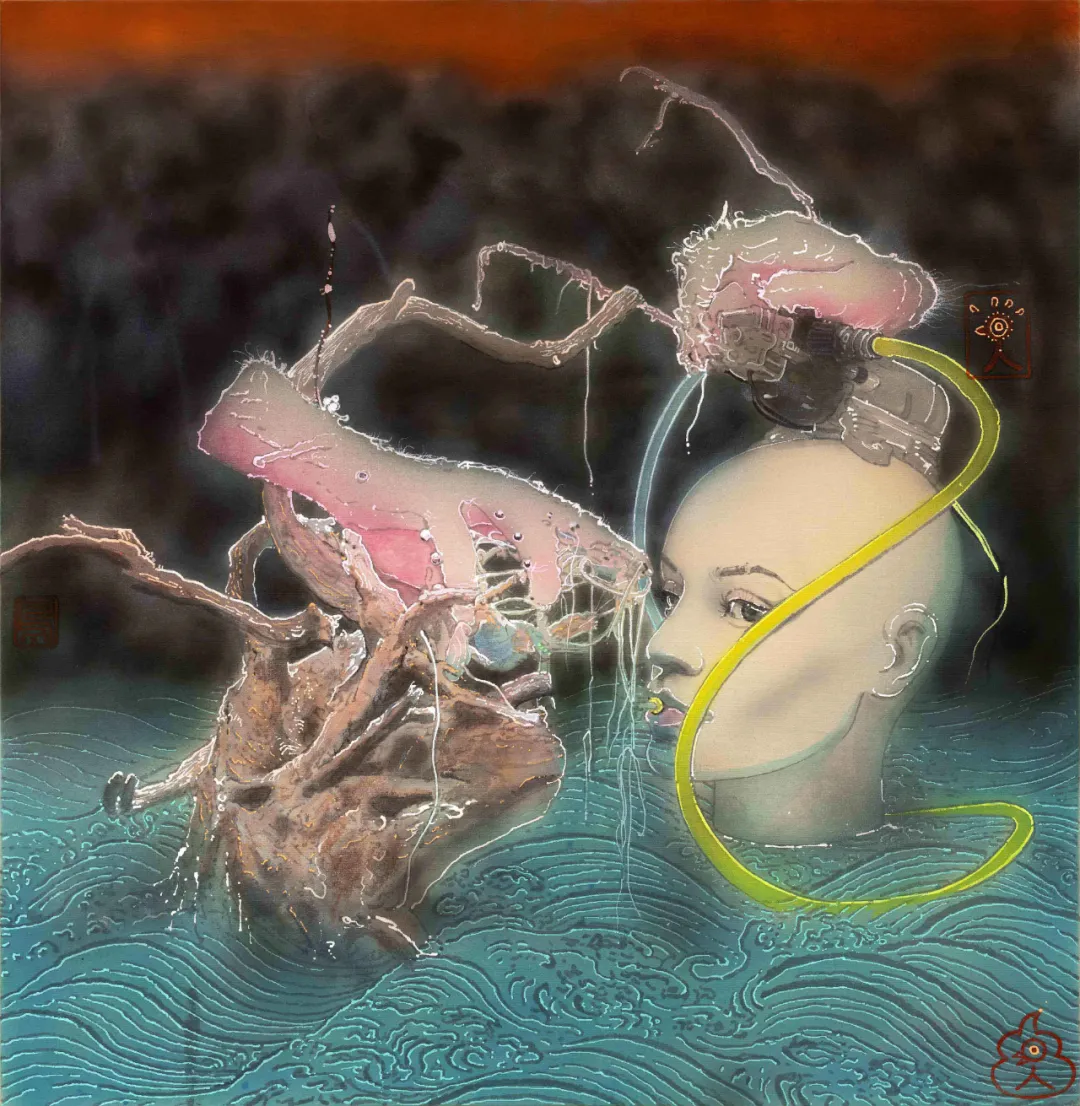
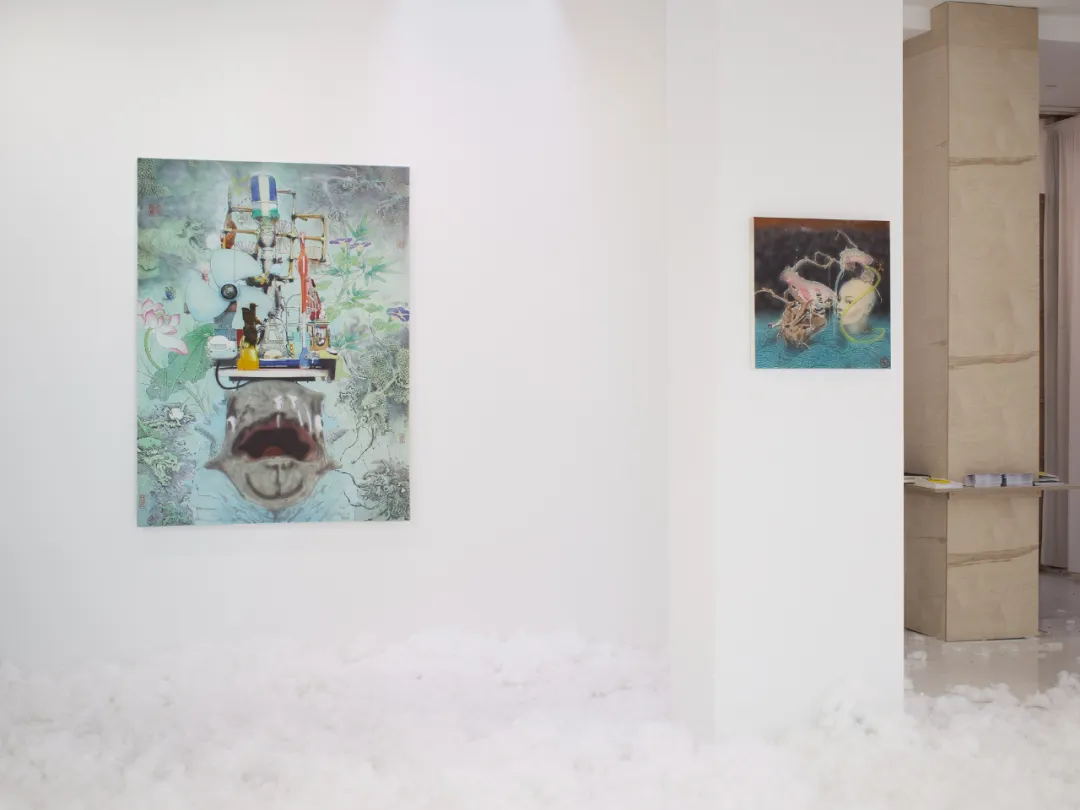
《浪卷黄昏后》中的绘画并不讲述故事,而是铺展为一幅幅情绪地貌图,一张张不安的地图。在《⿊⾊⻛暴前的宁静图》(2025)与《海浪昏君图》(2025)中,我们遇见的既非赛博,亦非幽灵,而是由情绪与残骸拼组的后人类身影:一具碧绿的断裂肋骨自潮水中升起,一位没有王朝的机械君主,漂浮在符号与失效机器的包围中。他们的世界充满电闪雷鸣与静默崩塌。这些并非隐喻,而是以荒诞、恐惧与幽微优雅的语言在诉说。童昆鸟并非在“引用”传统,而是将其化入血肉。他对传统绘画技法、文人建筑与氤氲笔触的运用,并非出于反讽或观念操作。画面中的碎片不是文献式的引证,而是情感的义肢,使本已不稳的视觉场域得以锚定。如果说数字时代让意义碎片化,那么童昆鸟回到过去寻找的,是一种定向感,不是模仿,而是感受。他的美学是一种“情绪化的场景设计”,偏向仪式,而非纪念碑。如果一切纪念碑终将倒塌,他的世界里,符号早已游离于语法之外。
The paintings in After the Waves and the Dusk do not tell stories. They unfurl like emotional topographies—maps of unease. In works like Calm Before the Black Storm (2025) and The Benighted Lord of the Waves (2025), we meet post-human figures that are neither cyborgs nor ghosts, but assemblages of affect and debris: a dismembered green rib cage rising from the tide; a mechanical ruler with no dynasty, surrounded by drifting icons and failed machines. Their world is one of electric storms and quiet collapse. These are not metaphors. They speak in the language of dread, absurdity, and spectral grace. Rather than quoting tradition, Tong metabolizes it. His use of Ming painting techniques, literati architecture, and atmospheric brushwork is not ironic or conceptual. The fragments in his paintings are not citations but emotional prosthetics, grounding an otherwise unstable visual field. If the digital era atomizes meaning, Tong returns to the past to find orientation—not to imitate, but to feel. His aesthetic is one of emotional scenography: ritual, not monument. If every monument must fall, his is a world where symbols have detached from grammar.
这种在再现与再呈现之间的张力贯穿整个展览。西方艺术史常将“摹仿”与掌握或断裂相联系,通过批判距离实现形式创新;而中国视觉文化更强调暧昧、共鸣与内化。童昆鸟作品中的历史借用,并非观念层面的引用,而是情感的载体。这与西方艺术家雪莉·莱文(Sherrie Levine)的挪用策略截然不同。她们的姿态建立在“作者之死”等理论与冷峻的智性距离之上,而童昆鸟将艺术史作为个人的情感储备,一套感受的工具。在文人画中,笔墨即是哲学,空间即是节奏。因此,《浪卷黄昏后》并非关于历史、身份或批评的展览。它关乎的是当意义失效时,情绪如何延续。童昆鸟营造的是雾霭,而非丰碑;他描绘的是废墟,却拒绝怀旧。他的绘画没有提供解答,只留下那份诡秘而庄重的坚持:在风暴中存续,在废墟中生生不息。
This tension between representation and re-presentation undergirds the entire exhibition. Where Western art history has long associated imitation with mastery or rupture—formal innovation through critical distance—Chinese visual culture has privileged ambiguity, resonance, and the internalization of form. The historical references in Tong’s work are not conceptual citations but vehicles for feeling. Unlike Western artists such as Sherrie Levine, whose appropriation strategies were framed by theories like the “death of the author” and a cool intellectual distance, Tong uses art history as a personal reservoir—an emotional toolset. In literati painting, brushwork was a philosophy; space, a rhythm. In this sense, After the Waves and the Dusk is not an exhibition about history, identity, or critique. It is about how mood survives when meaning no longer makes sense. Tong builds fog, not monument. He paints ruins, but refuses nostalgia. His paintings offer no resolution—only the eerie dignity of enduring, of surviving the storm.
关于艺术家
童昆鸟
Tong Kunniao
其近期展览包括2024年在蓝岸画廊举办的个展“童昆鸟作品展:机机复机机”,在重庆时代美术馆的群展“未来人类纪”,2022年在中国佛山的群展“第二届南海艺术展览”,2021年在中国上海cc基金会的个展“Golden Dystopia on Three Millimeters”,在中国北京skp-s举办的个展“Being Together“,在上海多伦现代美术馆的群展“中国当代艺术年度展览”,及2020年在德国柏林户尔空间的个展”Just stay in the cold”。
Tong Kunniao was born in Hunan, China in 1990, graduated from the Third Studio of the Sculpture Department at the Central Academy of Fine Arts in 2015, and was admitted to a master’s program in 2016, which he left in the same year. Now lives and works in Beijing, China.
Tong Kunniao is known for creating immersive worlds filled with dark humor through a diverse range of media, including installation, performance, video, sculpture, and painting. He often utilizes the (excess) products from modern society’s perpetual waste factories and accessible remnants from personal daily life, freely sampling aesthetic impulses from both Chinese and Western art history. His unique and highly personalized multimedia approach articulates the constraints and consumption imposed by complex social structures on individual identity and status. By deconstructing ready-made objects, integrating mechanical links, and incorporating factors like gravity balance, he addresses the individual consciousness behind the materials, as well as the multiple variables and vulnerabilities within social mechanisms. In a time dominated by fetish emotions, consumer culture symbols, and information overload, he continually pushes the boundaries of human imagination about recreated objects, presenting works that are both sharp and playful in their reconstruction. Many of Tong’s works emphasize the fragility of balance—whether it is within oneself, within the community, or in finding equilibrium with others. As one of China’s most renowned young artists today, his paintings offer a deep insight into his complex reflections on the quantification and mechanization of human experience and the fragility of all life in the Anthropocene.
His recent exhibitions include the 2024 solo exhibition “TONGKUNNIAO: Machine Upon Machine” at Gallery Lan, the group exhibition “Future Humanity Chronicle” at the Chongqing Contemporary Art Museum, the 2022 group exhibition “The Second Nanhai Art Exhibition” in Foshan, China, the 2021 solo exhibition “Golden Dystopia on Three Millimeters” at the CC Foundation in Shanghai, the solo exhibition “Being Together” at SKP-S in Beijing, the group exhibition “China Contemporary Art Annual Exhibition” at the Shanghai Duolun Museum of Modern Art, and the 2020 solo exhibition “Just stay in the cold” at Hua International in Berlin, Germany.
关于户尔空间
About Hua International
户尔空间(Hua International)是一家位于柏林与北京两地的当代艺术画廊,展览、出版和公共项目致力于跨学科及行为表演的艺术实践。画廊专注于发展与艺术家长期动态的合作关系,以其地理上的两地性为依托,扩展艺术家及其作品在迥异文化背景下的展览和接受。
以 XC.Hua 为名,经历了两年实验艺术策展项目运营积累后,花笑婵于2020年8月正式更名成立了户尔空间(Hua International),并在北京798艺术区、柏林历史悠久的当代艺术中心之一麦卡托庭院分别设立空间。在常驻两地空间之外,户尔空间也在国际知名的艺术博览会展示其艺术家作品。
Hua International is a contemporary art gallery located in Berlin and Beijing whose exhibitions, publications, and public programming supports cross-disciplinary and performative artistic practices. The gallery focuses on developing long-term relationships with its represented artists and leverages its geographic bilocation as a means to critically expand how their work can be presented and received in radically diverse cultural contexts.
After two years curating the experimental art and performance project XC.Hua, Xioachan Hua founded Hua International in August 2020 and inaugurated the new gallery with spaces in Berlin’s historic Mercator Höfe and Beijing’s acclaimed 798 Arts District.


