

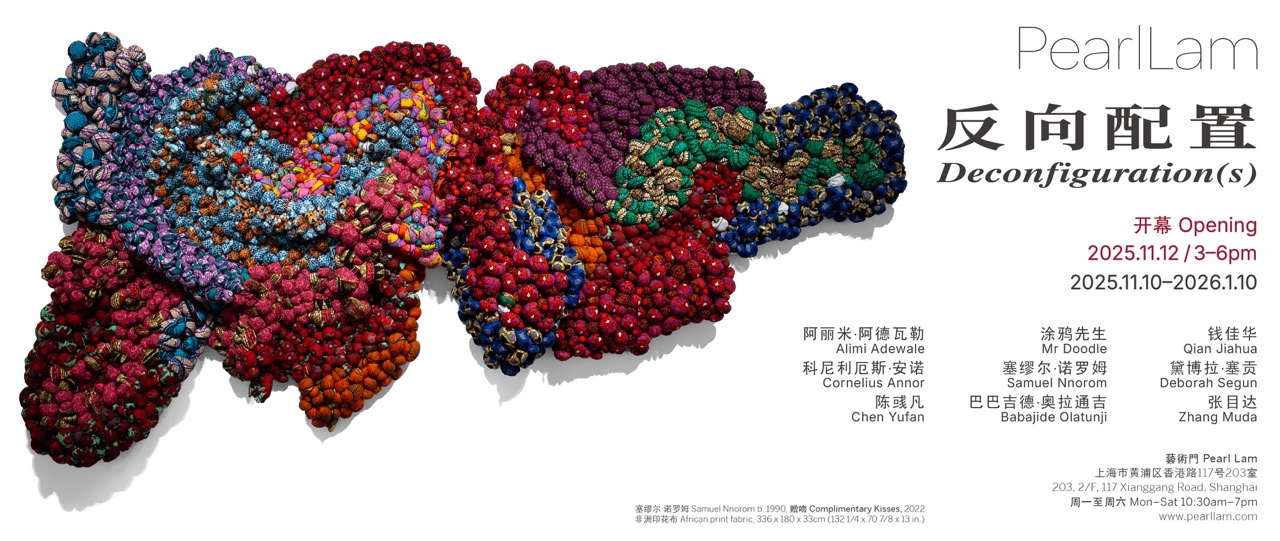
反向配置
Deconfigurationc (s)
展期:2025年11月10日—2026年03月03日
艺术家:阿丽米·阿德瓦勒(Alimi Adewale)、科尼利厄斯·安诺(Cornelius Annor)、陈彧凡、涂鸦先生(Mr Doodle)、塞缪尔·诺罗姆(Samuel Nnorom)、巴巴吉德·奥拉通吉(Babajide Olatunji)、钱佳华、黛博拉·塞贡(Deborah Segun)、张目达
地点:藝術門|中国上海香港路117号2楼203室
藝術門呈现《反向配置》,批判传统策展逻辑,邀9位艺术家借AI挑战单一解读,观众可通过AI与思考发现作品多边叙事,成为意义创作者。Pearl Lam presents “Deconfiguration[s]”, critiquing traditional curatorial logic. 9 artists, aided by AI, challenge singular interpretations. Audiences use AI and reflection to discover multilateral narratives, becoming meaning creators.لمعرض “إعادة التهيئة” من قبل بيرل لام، الذي ينتقد المنطق التعريفي التقليدي، حيث يُدعى 9 فنانين بمساعدة الذكاء الاصطناعي لتمييز التفسيرات المفردة. يُمكّن المشاهدين من اكتشاف السردات المتعددة باستخدام الذكاء الاصطناعي والتفكير ليصبحوا مُبدعين للحكاية.
藝術門荣幸呈现展览《反向配置》,本次展览的概念,源于对传统策展逻辑的批判:将艺术作品置于一个总体主题之下,这种做法可能会将观众限制在固定的解读框架内。借鉴云计算中通过撤销规则来停用系统的概念,“反向配置”是一项实验,聚焦于运用不同具象形式的艺术家。通过使用不同的生成式大型语言模型,我们邀请了9位艺术家,包括阿丽米·阿德瓦勒、科尼利厄斯·安诺、陈彧凡、涂鸦先生、塞缪尔·诺罗姆、巴巴吉德·奧拉通吉、钱佳华、黛博拉·塞贡及张目达,旨在激发多边或矛盾叙事的互动,同时将艺术作品视为即兴、随时准备接受公众开创的对象。
以下是参与此次试验性实验的9位主角。
陈彧凡探索艺术如何作为一种冥想工具,用于自我约束,以修补碎片化的自我。他断言:“空间不再是平面图像。它是一种可体验的、具体的和心理的存在。虽然物理空间的维度无法改变,但我们可以通过艺术转变我们的精神和心灵空间。”在《箴言》中,陈彧凡使用电烙铁在纸上刻画微小的点作为日常仪式;这种冥想行为表达了对过去家庭记忆和童年想象的心理疏离。《被切割的风景15号》通过层层叠加颜料实验,直到景观的原始轮廓消失,形成新想象空间。《衍生物—被折叠的风景之四》记录了喷溅颜料沿着垂直表面滴落的残留动作。同时展出的还有一段记录陈在其家乡莆田创作现场作品的视频。
追溯到“汉字的起源”,张目达使用单字来概括四字短语“八喜临门”(指一种民间传说,寓意对生活中重大事件的憧憬)。这些伪汉字颠覆了作品的突兀品质,促使观众将书法与对文化传统的渴望联系起来。追求理想形式不再是这里的关注点;相反,作品上的笔触成为了艺术家自我表现的新容器。
受詹姆斯·乔伊斯的《一个青年艺术家的肖像》和西非约鲁巴语言传统的转世教义启发,巴巴吉德·奥拉通吉在思考诸如“我画的主体是谁,他们能讲述什么故事”的问题。他设想了一个想象人物的衰老过程,这个人物可能是来自其他生世的化身。在此呈现的是一幅三联画,以及Amiy Dorca Shekwokusumi的音频叙述,她是一位自豪的巴吉女性,在祖母引人入胜的Gwari文化故事中发现了自己对讲故事的热情。
阿丽米·阿德瓦勒探究快速发展对社区和身份的影响。他的纹理绘画唤起城市生活中的层层叠叠体验,从基里姆毯、达里和约鲁巴Aso oke手工织布等纺织品中汲取形式参考来创作。他喚起观众在现代的混乱中反思自身的命運,并在急速的世界中调和个人与集体历史。
钱佳华在秩序与混乱之间调解,并将艺术作品视为内在连贯性和自足生活的演繹。在新冠疫情期间,她重新拉伸旧画布,并将它们重新配置成新的视觉诗歌。《蓝屏》使用不同色调的蓝色来转变我们对绘画平面的阅读。光泽与哑光表面之间产生张力,而细线刺穿作品,呈现出冲突与平衡互动的画面。
塞缪尔·诺罗姆着迷于“存在”,即当下、人性,以及超越种族、肤色或地理限制的大同世界。他以Ankara布料作为主要媒介,塑造出唤起卵子和原子的气泡形式。通过缝合、拉扯、填充、卷曲和缝纫,所有电磁力和生命本身的起源得以显现。他的方法体现了个体与社区在统一结构及社会动态中的联系。
黛博拉·塞贡采用解构方法,将碎片化的女性面孔和身影投射为沉思或休憩中的剪影。她缅怀着脆弱的过去,将“自爱”奠定为情感的盾牌,引发通向自我实现的治愈之旅。她的绘画融合了极简的精致与苍白交替的色调,以平坦和平静勾勒主体,作为邀请女性追求实现的召唤。
科尼利厄斯·安诺从他在加纳的个人经历和摄影中汲取灵感,共同探索家庭和社区空间中的凝聚力和亲密感。他的作品《Akwaaba》(在阿坎语中意为“欢迎回来”)重现了20世纪80年代和90年代加纳侨民归来时被以爱、尊重和团结欢迎的情景。《Ma Ye Nkasa》(意为“让我们谈谈”)以家庭亲密和合作为中心。他的作品中形成了传统加纳纺织品的纹理图案,营造出层层记忆、情感和经历的细腻氛围。
涂鸦先生分享道:“我们希望为我们结婚的第一年创造一个永恒的视觉、艺术记录,希望我们会喜欢看到这些作品一起展出并按顺序呈现。爱和色彩都是真正普遍的语言,我认为观众会在它与世界其他地方分享之前就欣赏我们的故事。”《涂鸦者的亲吻》以直接的方式庆祝生活中的爱与美好。
提示詞/:
本展览通过人工智能的反馈在画廊内不同位置重复并置艺术作品,从而颠覆艺术作品的含义。请将本展览视为自动驾驶,这些艺术作品仅作为开源,我们邀请观众通过使用人工智能手段及人性思考,使这种参与变得个人化,去发现意想不到的意义,鼓励观众透过但不限于以下的叙事角度观赏展览,并以自身经历思考衍生出新的角度。毕竟,观众才是这个故事的最终作者和创作者。
叙事1:自我不完整
在“与不完整的自我相关”的安静解构中,我们成为碎片化身份的制图师,展览中的作品是一张集体地图,抵抗单一、固定的自我。在日益数字化的世界中,身份被策划,历史被算法过滤,表现被简化为像素。每位艺术家的解构成为一种激进的解放行为。他们拒绝数字神话中光鲜的自我,而是挖掘在线生活的裂痕,揭示数字往往抹除的东西:混乱、记忆和边缘性。
叙事2:历史与叙事
历史不是线性叙事。它是一个可塑的、常常碎片化的领域,需要被审问、拆解并重新想象。艺术家们对历史的视角拒绝单一的官方过去概念,而是聚焦于传统历史叙述常常沉默的空白、抹除和个人真相。
叙事3:描绘与再现
每位艺术家的身份解构直接挑战传统描绘概念[我们如何看待一个主体]、再现 [我们如何處於其中],甚至对人类主体的理想化,拒绝单一图像或故事能够捕捉完整自我的想法。


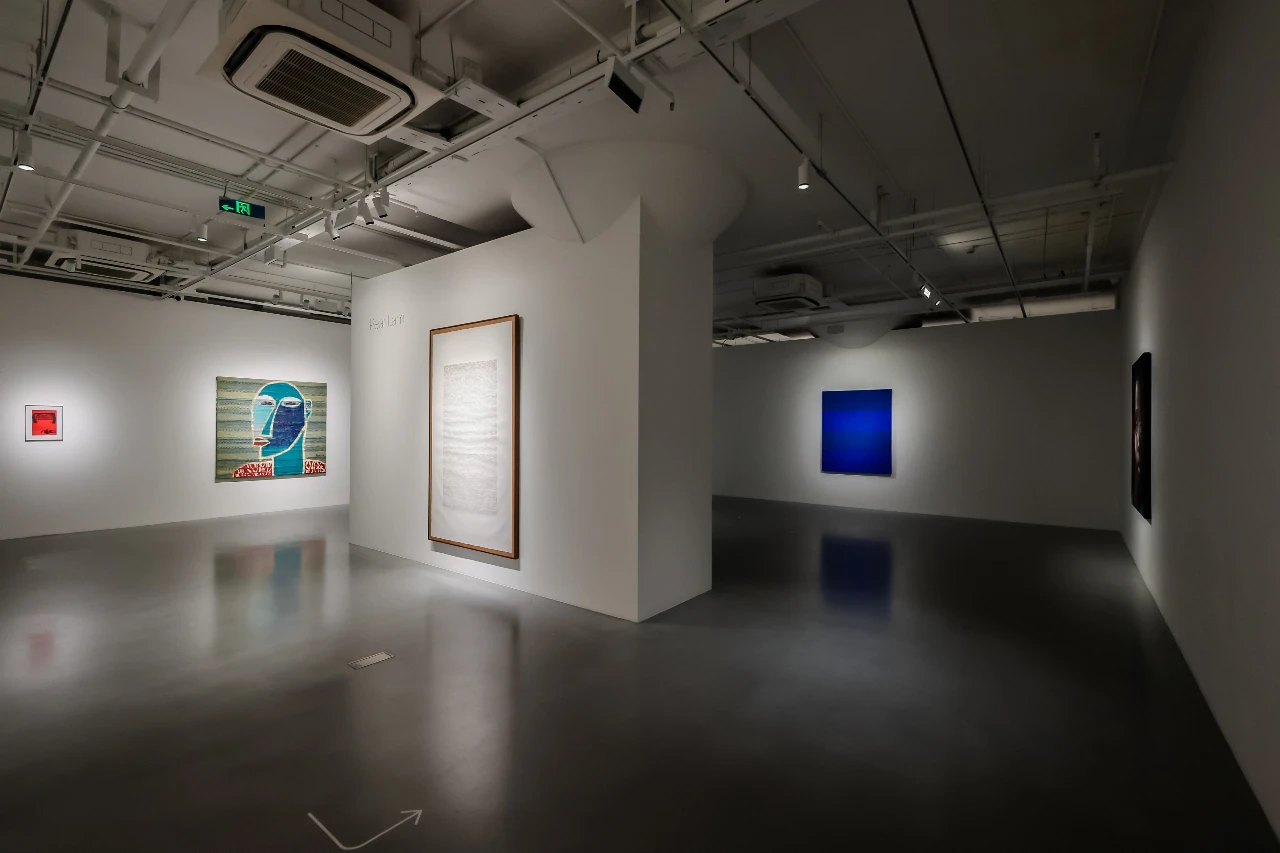

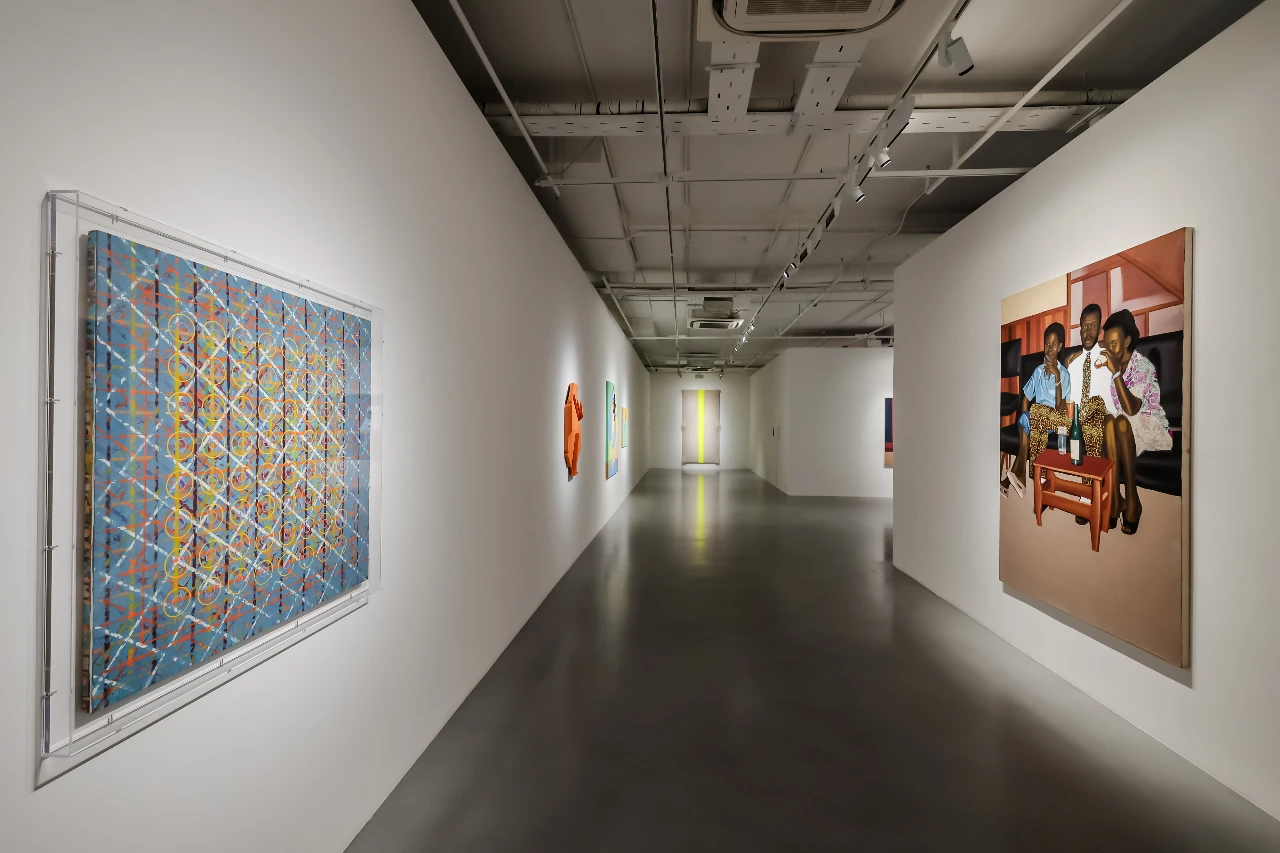

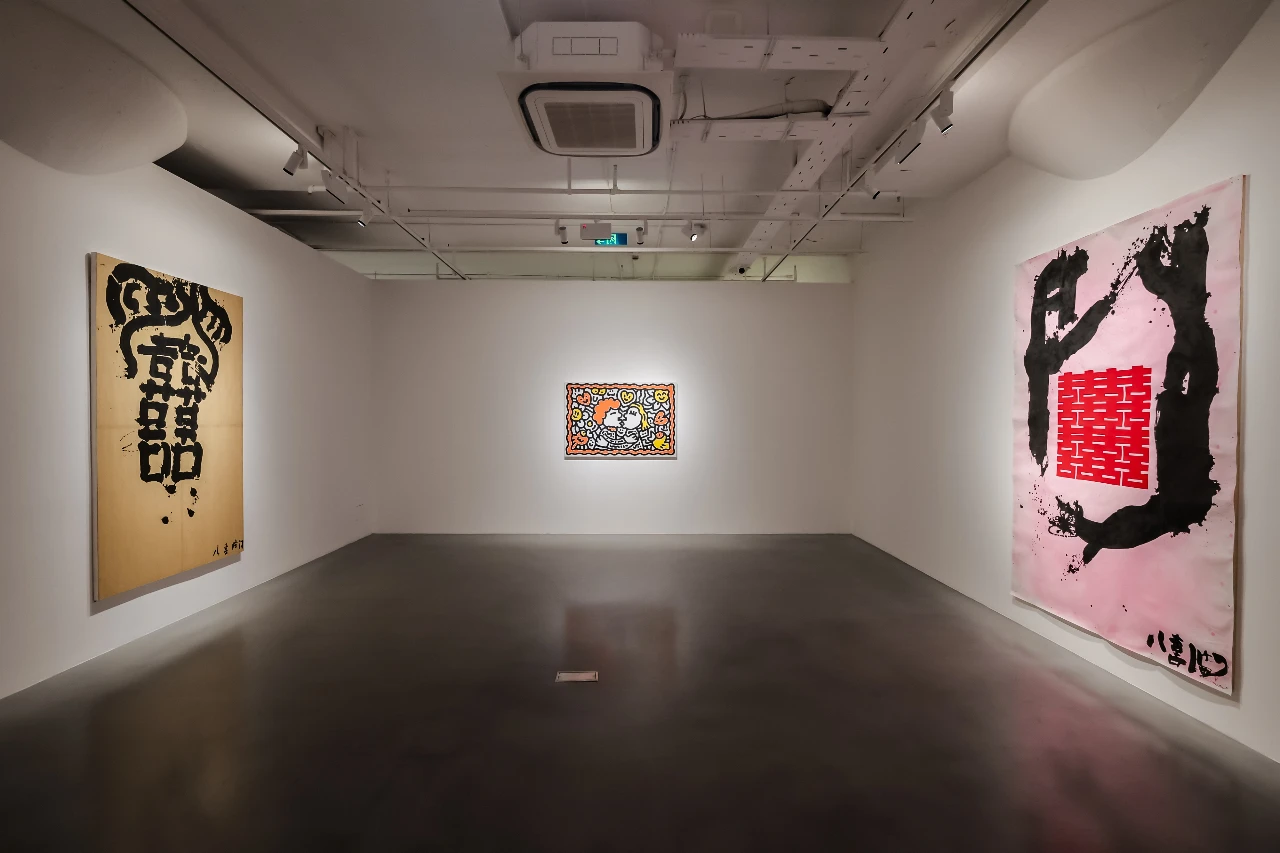
Below are the nine protagonists participating in this experiment.
Chen Yufan explores how art functions as a meditative tool for self-discipline to mend a fragmented self. He asserts, “Space is no longer a flat image. It is a tangible and psychological presence that can be experienced. While the dimension of physical space cannot be altered, we can transform our mental and spiritual space through art.” In Proverb, Chen uses an electric soldering iron to inscribe minute dots onto paper as a daily ritual; this meditative act expresses psychological detachment from past family memories and childhood imaginings. A Sliced Landscape No. 15 experiments with the layering of paint until the original contour of the landscape vanishes into a newly imagined spatiality. Derivative Folded Landscape No. 4 records the residual of spouted paint dripping along a vertical surface. A video documenting Chen’s making of an in-situ work at his home at Putien is also on view.
Harking back to the “beginnings of Chinese characters”, Zhang Muda uses a single character to encapsulate the four-character phrase “Eight Joys Coming to the Door” (a folklore that connotes aspirations for life’s significant events). These pseudo characters subvert the series of works’ abrupt quality, prompting viewers to associate them with calligraphy and a longing for cultural tradition. The pursuit of ideal form is no longer of concern here; instead, his gestural works manifest new vessels for self-expression.
Inspired by James Joyce’s A Portrait of the Artist as a Young Man and the doctrine of reincarnation from the Yoruba linguistic tradition of West Africa, Babajide Olatunji grapples with questions like “who are the subjects I paint and what stories could they tell?” He envisions the aging process of fictional characters who might be incarnations from other lifetimes. Presented here is a triptych together with an audio narration of Amiy Dorca Shekwokusumi, a proud Gbagyi woman who discovered her passion for storytelling through her grandmother’s captivating tales of Gwari culture.
Alimi Adewale probes the impact of rapid development on community and identity. His textured paintings evoke the layered experiences of city living, drawing formal reference from textiles like Kilim, Dhurrie, and Yoruba Aso oke handwoven cloth. He asks viewers to reflect on their own fate amid modernity’s chaos and to reconcile individual and collective histories in a fast-paced world.
Qian Jiahua mediates between order and chaos and sees artworks as capsules for staging coherence and self-contained lives. During the COVID-19 pandemic, she began to re-stretch canvas from old paintings and reconfigured them into new visual poetry. Blue Screen employs varying shades of blue to transform our reading of the picture plane of the painting. Tensions arise between glossy and matte finishes, while thin lines pierce the work to stage an interplay of conflict and balance.
Samuel Nnorom is fascinated by “existence”, being present, human, and rooted in a universal space beyond race, colour, or location. Using Ankara cloth as a primary medium, he builds up bubble forms evoking eggs and atoms. The genesis of electromagnetic force and life itself is revealed through stitching, pulling, stuffing, rolling, and sewing. His methods signify the connection between an individual and community within a unified structure and its social dynamics.
Deborah Segun adopts a deconstructive approach, projecting fragmented female faces and figures as silhouettes in contemplation or repose. Revisiting her vulnerable past, she frames self-love as a shield for emotion, sparking a healing journey toward self-actualisation. Her paintings blend minimalist delicacy with pale, alternating hues, outlining subjects with flatness and calm as an invitation for women to strive toward fulfilment.
Cornelius Annor draws from his personal experiences in Ghana and his photography to explore togetherness and intimacy within domestic and community spaces. His work Akwaaba (meaning welcome back in Akan) revives the scenario of Ghana’s diaspora being greeted with love, respect, and solidarity upon returning in the 1980s and 1990s. Ma Ye Nkasa (meaning “let’s talk”) centres around family intimacy and cooperation. Traditional Ghanaian textiles form textured patterns in his work, creating a nuanced atmosphere of layered memories, emotions, and experiences.
Of his recent series of works featuring himself and Mrs. Doodle, Mr Doodle shares, “We wanted to create an everlasting visual, artistic record of our first year of marriage. We hope that we will enjoy seeing the work exhibited together and in sequence. Love and colour are both truly universal languages, and I think that the audience will appreciate our story before it is shared with the rest of the world.” Doodler’s Kiss celebrates the love and enchantment of what life has to offer.
A Prompt/Provocation: This exhibition utilises artificial intelligence to destabilise the meanings of artworks through repetitive juxtapositions of artworks at different locations inside the gallery. Consider this exhibition as autonomous driving: the artworks merely function as open source. We invite audiences to make this engagement with the artworks personal by using artificial and intelligent means. They are encouraged to bear in mind but not be limited to the following narratives while going through this exhibition and to relate to the artworks based on their own personal experiences.
Afterall, the audience is the ultimate author and the auteur of this narrative.
Narrative 1: Self not whole
In the quiet unravelling of “in relation to self not whole”, we are cartographers of fragmented identity. The works on view are a collective map that resists the myth of a singular, fixed self. In an increasingly digital world where identity is curated, history is algorithmically filtered, and representation is reduced to pixels. Each artist’s deconfiguration becomes a radical act of unshackling. They reject the digital myth of a polished self, instead mining the fractures of online life to reveal what the digital often erases: messiness, memory, and marginality.
Narrative 2: History and narration
History is not a linear narrative. It is a malleable and often fragmented terrain, unstitched and reimagined. The artists’ perspectives on history reject the idea of a singular official past, instead focusing on the gaps, erasures, and personal truths that traditional historical accounts often silence.
Narrative 3: Depiction versus representation
Each artist’s deconfiguration of the human figure directly challenges traditional notions of depiction [how we see a subject], representation [how we stand in] or even idealisation of the human subject, rejecting the idea that a single image or story can capture a complete self.
关于藝術門
由林明珠女士创立的藝術⾨画廊,如今已成为推动亚洲当代艺术发展的重要力量之⼀。创立于2005年, 藝術⾨在促进东西方国际对话以及跨文化交流上⼀直扮演着关键的角色。
通过对年度展览计划认真规划,藝術⾨为观众呈现美术馆级别的高质量展览,重新审视并挑战亚洲文化实践的看法。通过中国和海外艺术家的强⼒组合,画廊致力于展览策划并注重市场培育。
藝術⾨画廊位于香港和上海。不仅拥有国际化的团队,藝術⾨的影响力更是遍及全球,参加了科隆国际艺博会(Art Cologne)、巴塞尔艺术展香港展会(Art Basel Hong Kong)、弗里兹⼤师展(Frieze Masters)以及西岸艺术与设计博览会等国际主流艺术展。
About Pearl Lam
Pearl Lam is a driving force within Asia’s contemporary art scene. Founded in 2005, the gallery plays a vital role in stimulating international dialogue and cross-cultural exchange between the East and West.
Following a rigorous programme, Pearl Lam presents museum-quality exhibitions that re-evaluate and challenge perceptions of cultural practice in Asia. With a thoughtfully balanced roster of Chinese and international artists, the gallery is strategic in its curation, positioning itself as an educator.
The gallery maintains a space in Hong Kong and Shanghai. With a team of international staff, Pearl Lam’s reach is global, having presentations at major international art fairs including Art Cologne, Art Basel Hong Kong, Frieze Masters, and West Bund Art and Design.


