宜春美术馆国际艺术交流项目
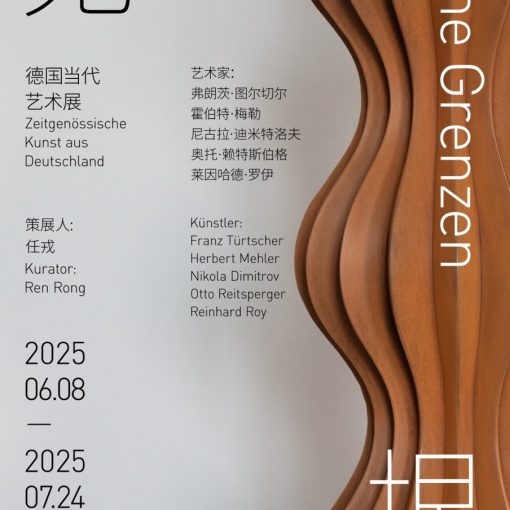
无界——德国当代艺术展
Beyond Boundaries – German Contemporary Art Exhibition
展期:2026年01月16日—03月15日
开幕:2026年01月16日 15:00
学术主持:吕品昌
策展人:任戎、迪特·荣特(Dieter Ronte)
艺术家:安东尼奥·马拉、贝巴·伊利奇、卡米尔·莱伯尔、克劳迪亚·费坎泊(Claudia Fegenbohm)、达尔科·尼科利奇、迪特·巴尔策、德克·萨尔茨、埃伯哈德·卢斯、弗朗茨·图尔切尔、汉斯·舒勒、霍伯特·梅勒、于尔根·帕斯、玛丽阿姆·莫塔莱布·扎德、缪晓春、尼古拉·迪米特洛夫、奥托·赖特斯伯格、莱因哈德·罗伊、任戎、颂尼娅·埃德勒·冯·赫斯勒、谭平、维克多·波泊夫
指导单位:宜春市文化广电旅游局
主办:宜春美术馆、德国波恩当代艺术馆
地点:宜春美术馆|江西省宜春市袁州区府西路1号科技之窗大楼
中德当代艺术跨文化对话展,汇聚绘画、雕塑、摄影等多元创作,延续包豪斯革新脉络,探索艺术语言本体性与跨文明共生。A cross-cultural dialogue of Sino-German contemporary art, featuring painting, sculpture, photography. Continuing Bauhaus innovation, exploring artistic language and civilizational coexistence.حوار ثقافي عبر الحدود بين الفن الحديث الصيني والألماني، يضم الرسم والمنحوتة والفوتوغرافيا، مستمر في تنويرات باهاوس، وتبحث عن اللغة الفنية والتعايش الحضاري.
无界:跨文化同构
——艺术,人类共通的精神母语。
“莫以宜春远,江山多胜游”,唐代文学家韩愈的这句诗,不仅成为描摹宜春风物之美的诗意礼赞,更以“民俗淳厚,政令宽简”的表述,为这片土地镌刻下文人治世的风土共情,千年文脉流转间,这片土地早已沉淀下突破边界、兼容并蓄的文脉底色:蕴蓄“象外之象”的东方哲思,秉持“物我共生”的人文意趣,为当代艺术的跨文化对话埋下深厚伏笔。
今时今日,宜春美术馆携手德国波恩当代艺术馆,共同呈献《无界:德国当代艺术展》,让跨越山海的艺术之约在赣西大地呈现。宜春美术馆自开馆以来,以“深耕本土、链接世界”为旨,从梳理宜春版画文脉到搭建公共美育平台,始终敞开对话之门。德国波恩当代艺术馆则植根莱茵河畔的艺术沃土,见证德国当代艺术对“形式与精神”的持续勘探,二者的携手,实现了跨文化同构的无界愿景。
德国当代艺术承续包豪斯“艺术与技术新统一”的革新脉络而来,其创作逻辑深植于20世纪形式革命的理念根基,既延续着对艺术语言本体性的探索,也呼应着该学派打破艺术与技术边界的核心追求,以艺术无国界的精神母语,构建起关乎人类如何认知世界的跨文化思辨场域。其创作深植形式革命传统,延续康定斯基“内在需要”原则,在多元媒介中尽显智性张力。
当代抽象绘画是对“形式自律”的极致践行:色彩挣脱物象束缚成为通感符号,几何形态的解构重组则化作艺术家与观者的精神契约密码本。每道线条、每块色域皆强调媒介物质性,拒绝表象复制,于简化符号中凝聚本质性的精神能量,尽显内敛的视觉修辞智慧。
当代钢铁雕塑在有机形态的诗性意涵与理性构造的逻辑秩序相耦合的过程中,解构传统雕塑的实体性认知范式:其形态创作既借折纸工艺的折叠逻辑,转译植物生长的动态节律,并非对自然形态的具象复刻,而是将生物生长的时序性转化为金属结构的空间叙事,暗合材料与艺术家共构创作的材料现象学理念,还萃取音乐符号的韵律特质,将听觉感知的节奏秩序转化为金属结构的理性脉络,在坚硬与柔韧的碰撞中实现形而上的超越。
当代摄影艺术以微观生命谱系与人类存在共同体为双重视角,展开对世界的深度解码,以极致精微的镜头语言捕捉微观昆虫世界,从翅脉纹路到肢体关节结构,皆以可视化方式放大弱小生命,引导观者脱离日常认知视角,审视微观生命体的形式逻辑与存在维度,使易被忽略的小生命与生命形态多样性的存在命题形成深度对话。
这些多元的艺术创作共同构成当代艺术的思辨图景,以开放姿态推动人类文明相融共生,为跨文化艺术对话注入深刻的精神能量。
特别是一批中国艺术家远赴德国,融入德国文化语境深耕创作。他们带着东方美学的基因,在西方艺术语境中汲取养分,让东方的诗性智慧与西方的理性思维在创作中碰撞交融,或在抽象语言中融入计白当黑的留白意境,将对故土的眷恋与对世界的思考,化作跨越边界的艺术表达。他们的作品是本体论层面的彼此照亮,成为中德艺术对话的鲜活纽带。
此次展览,是两种文明以艺术为语的深情对话。它打破地域与语言的界面,让德国艺术的思辨锋芒遇见宜春文脉的温润诗性,让东方的意象追求对话西方的形式探索。在这里,艺术是人类共通的精神母语,播下理解与共鸣的种子,让中德艺术在互鉴中生长,让艺术之美在“无界”的场域中永恒流淌,滋养彼此的文脉,照亮人类精神的共通疆域。
任戎
策展人
德国波恩当代艺术馆馆长
2025年12月
Boundless: Cross-Cultural Co-construction
— Art, the Universal Spiritual Mother Tongue of Humanity
“Do not deem Yichun far away; its rivers and mountains abound in scenic delights.” This line by Han Yu, a litterateur of the Tang Dynasty, serves not only as a poetic tribute to the captivating beauty of Yichun’s landscapes but also, with its depiction of “simple and honest folkways, and lenient and prudent governance”, etches upon this land the humanistic empathy of literati in governing the world. Over the millennia, as cultural heritage has been passed down, this region has long nurtured a cultural essence characterized by breaking boundaries and embracing inclusiveness: it embodies the Eastern philosophical thought of “images beyond images” and upholds the notion of “interdependence between humans and nature”, laying a profound foundation for cross-cultural dialogues in contemporary art.
Today, Yichun Art Museum, in collaboration with Kunstraum Villa Friede, a contemporary art space in Bonn, Germany, proudly presents Boundless: German Contemporary Art Exhibition, bringing this transcontinental artistic rendezvous to the land of western Jiangxi. Since its inauguration, Yichun Art Museum has adhered to the mission of “rooting deeply in local culture and connecting with the world”. From sorting out the context of Yichun’s printmaking to building a public aesthetic education platform, it has always kept its doors open for dialogue. Rooted in the fertile artistic soil along the Rhine River, Kunstraum Villa Friede in Bonn has witnessed the continuous exploration of “form and spirit” in German contemporary art. The collaboration between the two institutions realizes the boundless vision of cross-cultural co-construction.
German contemporary art inherits the innovative tradition of the Bauhaus school’s “new unity of art and technology”. Its creative logic is deeply rooted in the ideological foundations of the formal revolution of the 20th century. It not only continues the exploration of the ontology of artistic language but also echoes the core pursuit of this school to break the boundaries between art and technology. With art as the borderless spiritual mother tongue of humanity, it constructs a cross-cultural field of speculation on how humans perceive the world. Deeply rooted in the tradition of formal revolution, its creations uphold Wassily Kandinsky’s principle of “inner necessity”, demonstrating intellectual dynamism across diverse media.
Contemporary abstract painting represents the ultimate practice of “formal autonomy”: colors break free from the constraints of physical objects to become synesthetic symbols, while the deconstruction and recombination of geometric forms serve as a cipher of spiritual contract between artists and viewers. Every line and every color field emphasizes the materiality of the medium, rejecting the replication of appearances. They condense essential spiritual energy in simplified symbols, embodying the restrained wisdom of visual rhetoric.
Contemporary steel sculpture deconstructs the traditional cognitive paradigm of the substantiality of sculpture through the integration of the poetic connotations of organic forms and the logical order of rational construction. In terms of form creation, it not only draws on the folding logic of origami to translate the dynamic rhythms of plant growth—rather than a realistic reproduction of natural forms, it transforms the temporality of biological growth into the spatial narrative of metal structures, implicitly aligning with the phenomenological concept of materials that emphasizes the co-creation of materials and artists—but also extracts the rhythmic characteristics of musical notation, converting the rhythmic order of auditory perception into the rational framework of metal structures. Through the collision between hardness and flexibility, it achieves a metaphysical transcendence.
Contemporary photographic art decodes the world in depth from the dual perspectives of “microscopic life spectrum and the community of human existence”. It captures the microscopic insect world with extremely precise lens language. From the veins of wings to the structural details of limb joints, it magnifies these tiny lives in a visual way, guiding viewers to break away from their daily cognitive perspectives, examine the formal logic and existential dimensions of microscopic organisms, and thus establish an in-depth dialogue between these easily overlooked small lives and the existential proposition of “diversity of life forms”.
These diverse artistic creations together form a speculative landscape of contemporary art. With an open attitude, they promote the integration and coexistence of human civilizations, injecting profound spiritual energy into cross-cultural artistic dialogues.
In particular, a group of Chinese artists have gone to Germany to immerse themselves in the German cultural context and dedicate themselves to creative endeavors. Endowed with the genes of Eastern aesthetics, they absorb nutrients from the Western artistic context, allowing Eastern poetic wisdom to collide and merge with Western rational thinking in their creations. Some infuse their abstract language with the artistic conception of “leaving blank space”—a hallmark of traditional Chinese art—and translate their nostalgia for their homeland and reflections on the world into artistic expressions that transcend boundaries. Their works represent mutual illumination at the ontological level, serving as vivid bridges for Sino-German artistic dialogue.
This exhibition is a profound dialogue between two civilizations, with art as the medium. It breaks the boundaries of regions and languages, allowing the speculative edge of German art to encounter the gentle poetry of Yichun’s cultural heritage, and enabling the pursuit of imagery in the East to engage in dialogue with the exploration of form in the West. Here, art is the universal spiritual mother tongue of humanity. It sows the seeds of understanding and resonance, allowing Sino-German art to thrive through mutual learning, and enabling the beauty of art to flow eternally in this “boundless” field—nourishing the cultural veins of both sides and illuminating the common spiritual territory of humanity.
Ren Rong
Curator
Director of Kunstraum Villa Friede
December 2025