芭芭拉·查斯-里布德:约瑟芬们
Barbara Chase-Riboud:The Josephines
展期:2025年03月06日—06月14日
开幕:2025年03月06日 18:30 – 20:00
艺术家:芭芭拉·查斯-里布德(Barbara Chase-Riboud)
地点:豪瑟沃斯 Hauser & Wirth|摩纳哥·One Monte-Carlo Place du Casino 98000 Monaco
巴芭拉·蔡斯-里博德通过雕塑向传奇人物约瑟芬·贝克致敬,展现其跨越大西洋的人生与艺术的共鸣。
Barbara Chase-Riboud pays tribute to Josephine Baker through sculptures, highlighting their transatlantic lives and artistic resonance.
这个展览是著名雕塑家和诗人芭芭拉·查斯-里布德(Barbara Chase-Riboud)对传奇人物约瑟芬·贝克(Josephine Baker,1905-1975)的致敬,同为生于美国,长居法国的黑人女性艺术家,约瑟芬横跨大西洋两岸的生活经历也与Chase-Riboud的生活有着颇多重合。
本次展览是为了纪念两人在约瑟芬最后一次舞台演出中相遇的 50 周年(也是约瑟芬去世 50 周年的纪念),以及这位舞蹈家在巴黎首次登台的 100 周年。这场具有里程碑意义的展览通过引人注目的艺术视角,纪念了约瑟芬卓绝的文化传承,展现了这位20世纪最具代表性表演者的强大的影响力与优雅艺术形象。
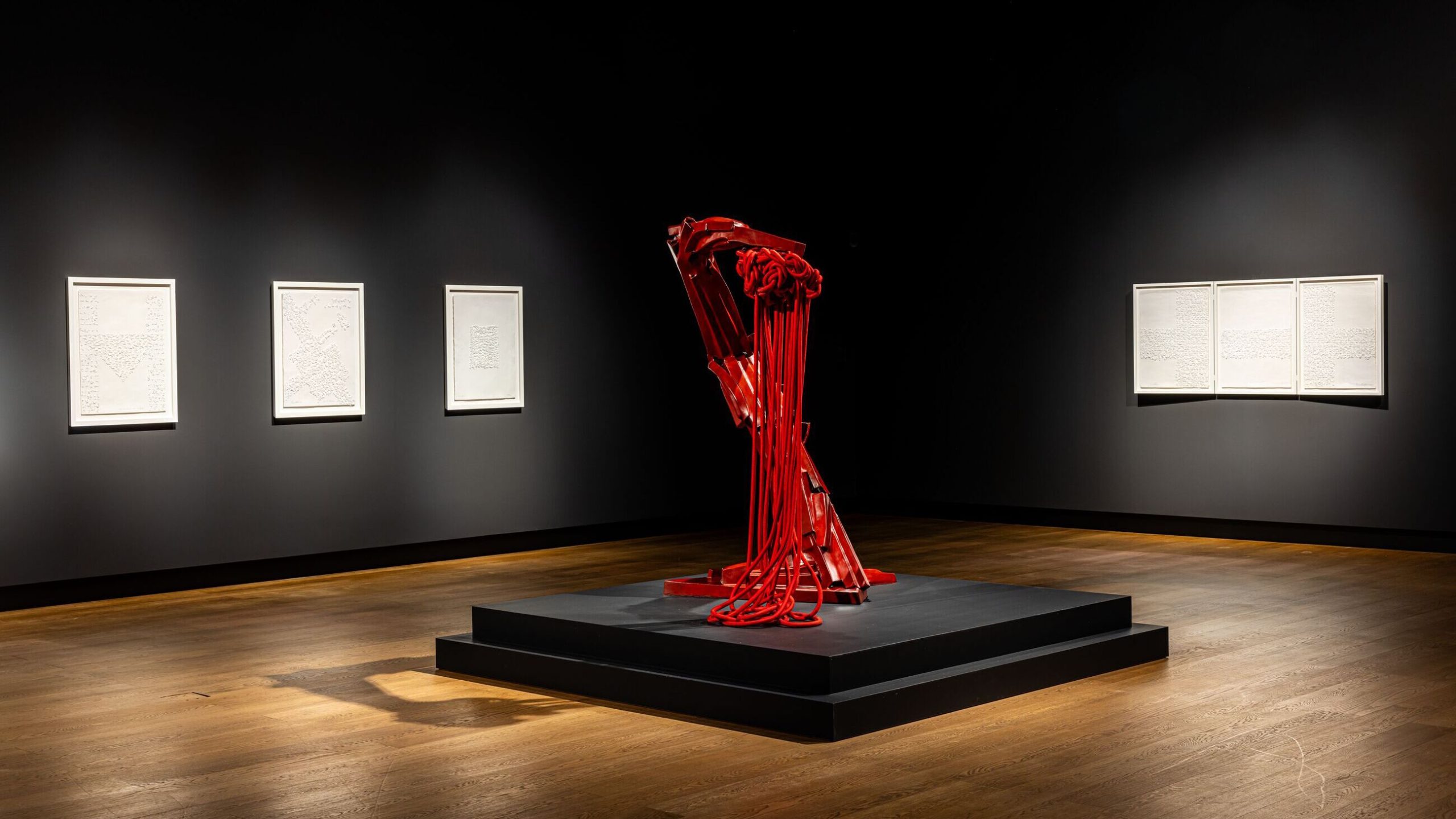
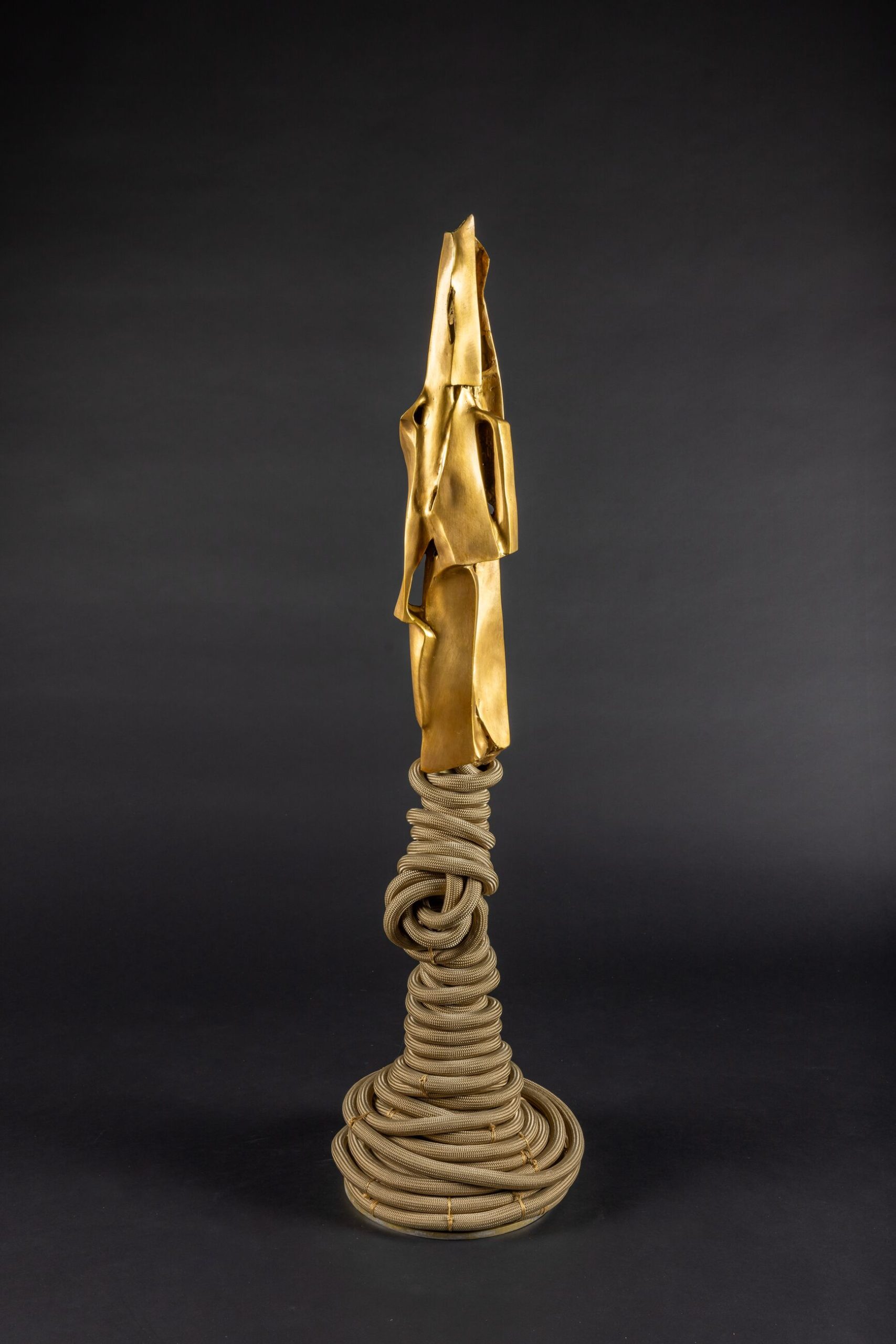
在巴黎历史性回顾展结束后,Chase-Riboud再次呈现了两件大型雕塑《约瑟芬·黑/黑》(2022)和《约瑟芬·红/红》(2022)及配套作品,包括首次亮相的著名《La Musica》系列(1990-2025)中的新作,和纸上作品。同期还展出了档案文献,包括约瑟芬在摩纳哥演出时的照片。
Chase-Riboud 和约瑟芬只在 1975 年见过一次面,是在巴黎她最后一次演出候场时的间隙,由为约瑟芬作开场表演的舞者 Carmen Lavallade 和 Geoffrey Holder 带去约瑟芬面前的。她回忆起约瑟芬如何在转眼间便从「老妇」变成了一个让全球观众为之倾倒的巨星。2021 年,Chase-Riboud 参加了约瑟芬的法国先贤祠入祀仪式,这激发了她创作了这些大型的约瑟芬群像。
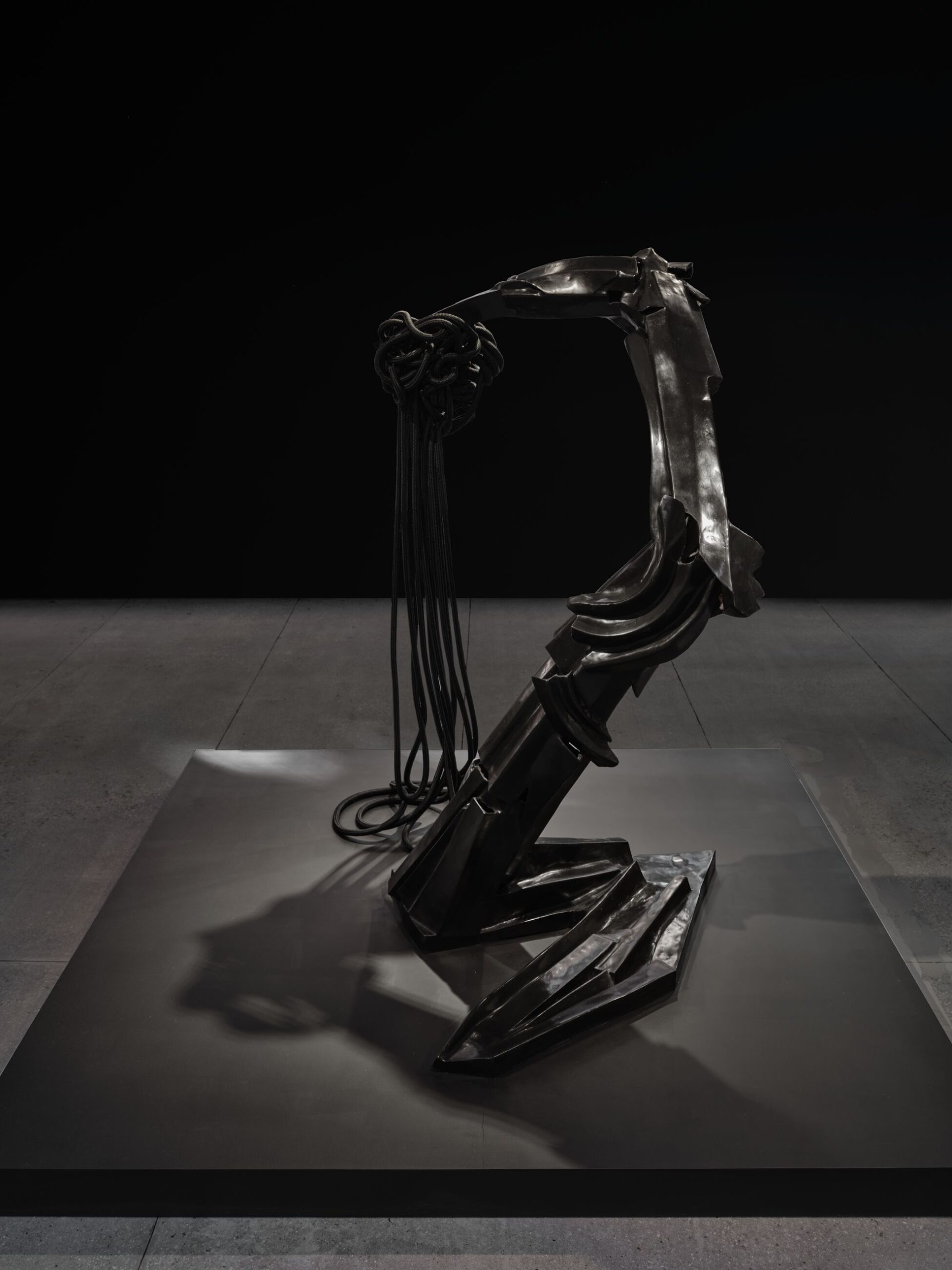
展览展示的两件 2022 年的青铜雕塑,是向传奇表演者、民权活动家和二战秘密特工约瑟芬致敬。每件雕塑高两米,经过做旧处理的青铜雕塑矗立在自己的舞台般的平台上,结合了坚硬的金属褶皱和豪华的纺织品。虽然从它们的顶端垂下厚厚的丝绸线圈垂至地面,这些抽象雕塑仍然不可避免地让人联想到约瑟芬那经典的肢体语言。
这些雕塑出自 Chase-Riboud 持续至今的《La Musica》系列,该系列通过材料和形式的鲜明对比探索音乐、运动和静止。
Chase-Riboud 将约瑟芬描述为“爵士风格的化身”,并补充说:“我想要创作《约瑟芬群像》的原因在于,她意味着冲向太空的飞跃(because it’s a leap into space.)。”
她认为约瑟芬的表演和生活经历是对传统艺术形式和社会规范的挑战,而这种挑战和突破正是Chase-Riboud所欣赏和追求的。她希望通过创作约瑟芬系列雕塑,捕捉和纪念这种勇于突破的精神。她还将约瑟芬与未来主义相联系,重新定义了具象雕塑作为纪念碑的概念。这些作品致力于节奏和光线,散发出一种强大的气场,并提供了一次形式、诗歌和美的感官体验之旅。
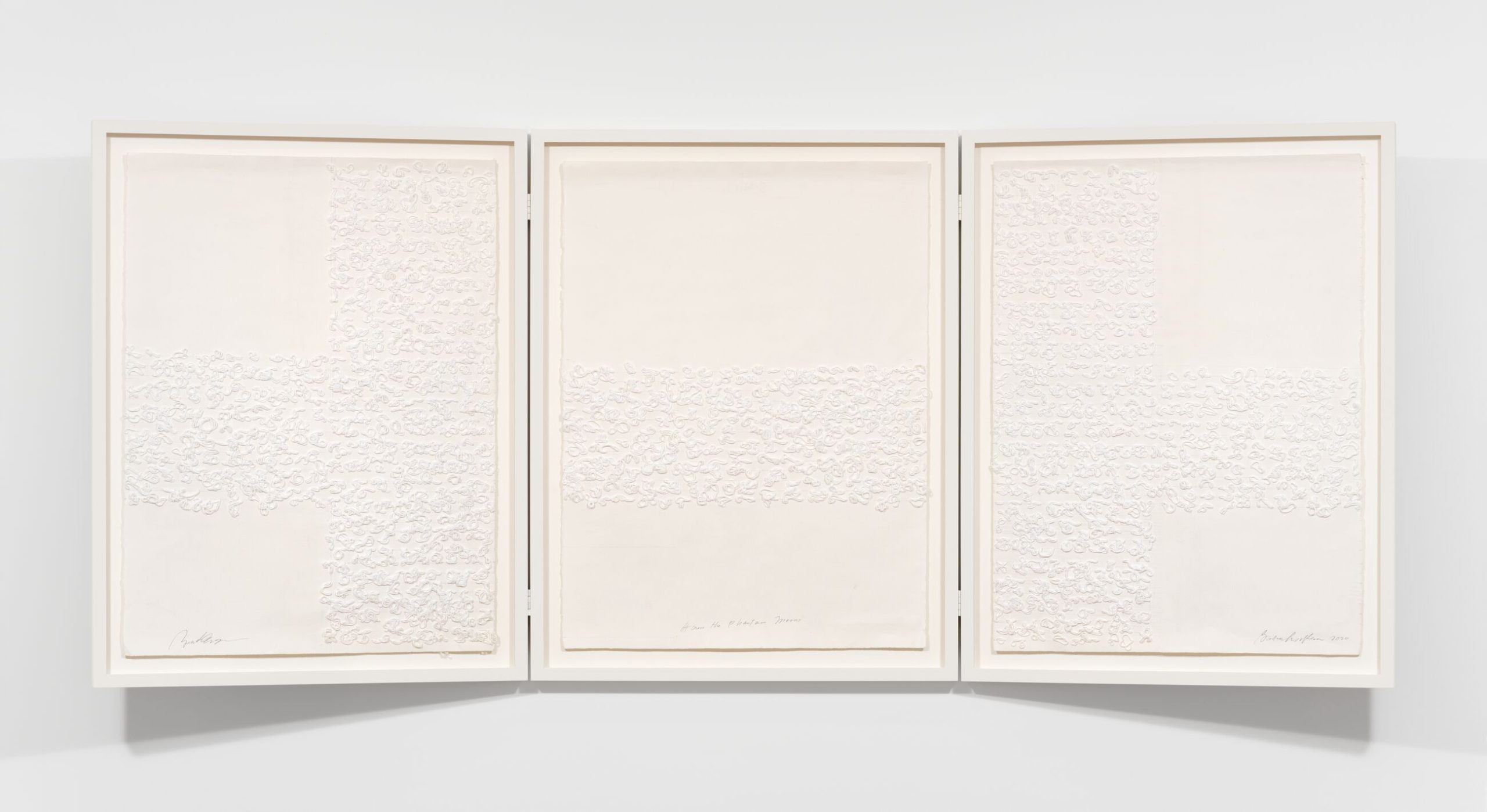
围绕这些形态,Chase-Riboud 还呈现了一组特别精选的淡雅纯白纸作。这些作品通过艺术家在过去五十年中发展和完善的技艺制成,结合了雕塑浮雕和绘画。它们是通过在纸上穿刺丝线制成的。这些作品既唤起了书法的流畅线条,又体现了象形文字的构图结构,在形式和概念上与Chase-Riboud的无意识书写和诗歌一脉相承。
Barbara Chase-Riboud’s《Monuments of the Mind》(心灵的纪念碑,2023)
via:Hauser & Wirth,A film by Rava Films,All artwork © Barbara Chase-Riboud


-

- La Musica Amnesia Red 音乐失忆红 2024
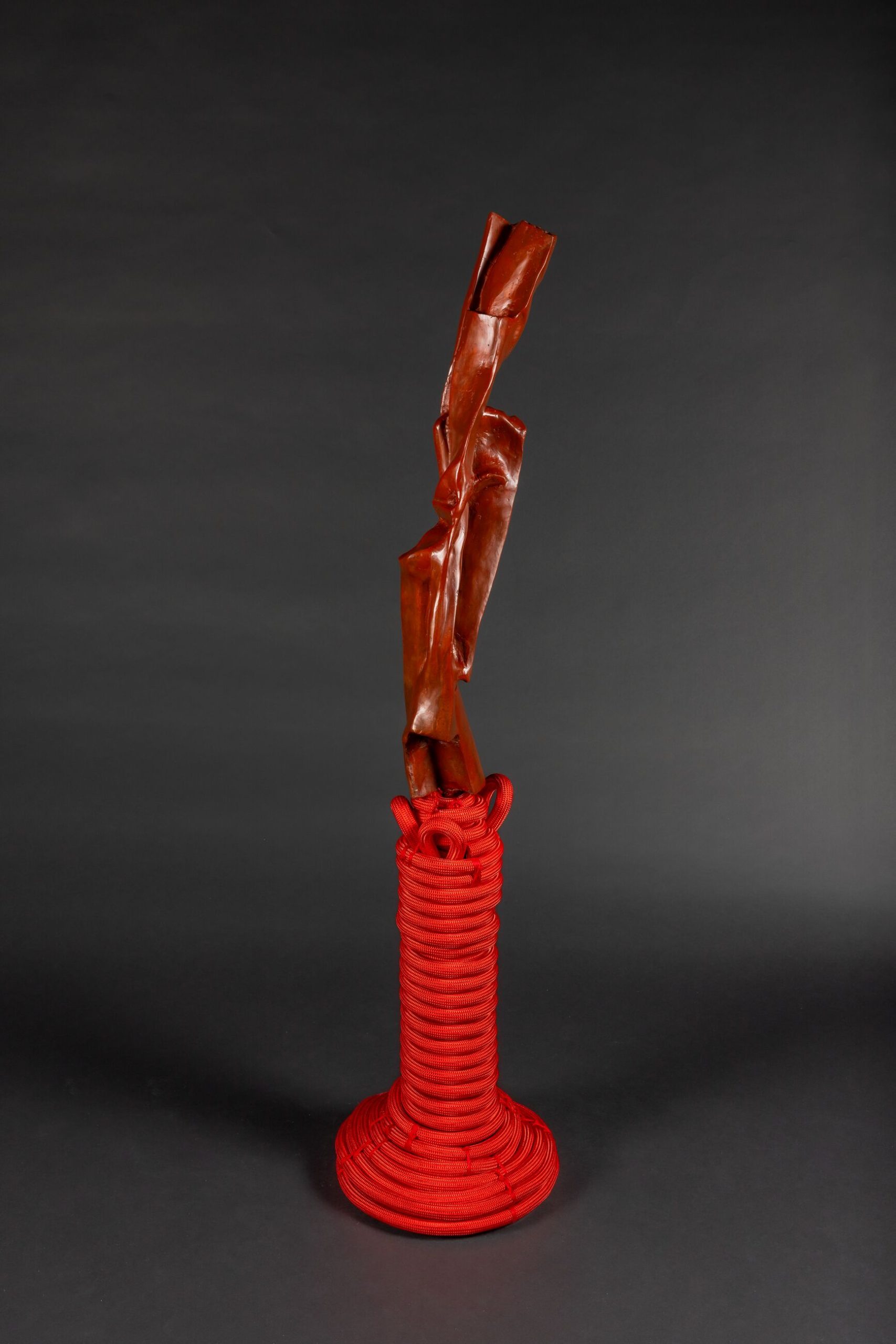
-
- La Musica Amnesia Black 音乐失忆黑 2024
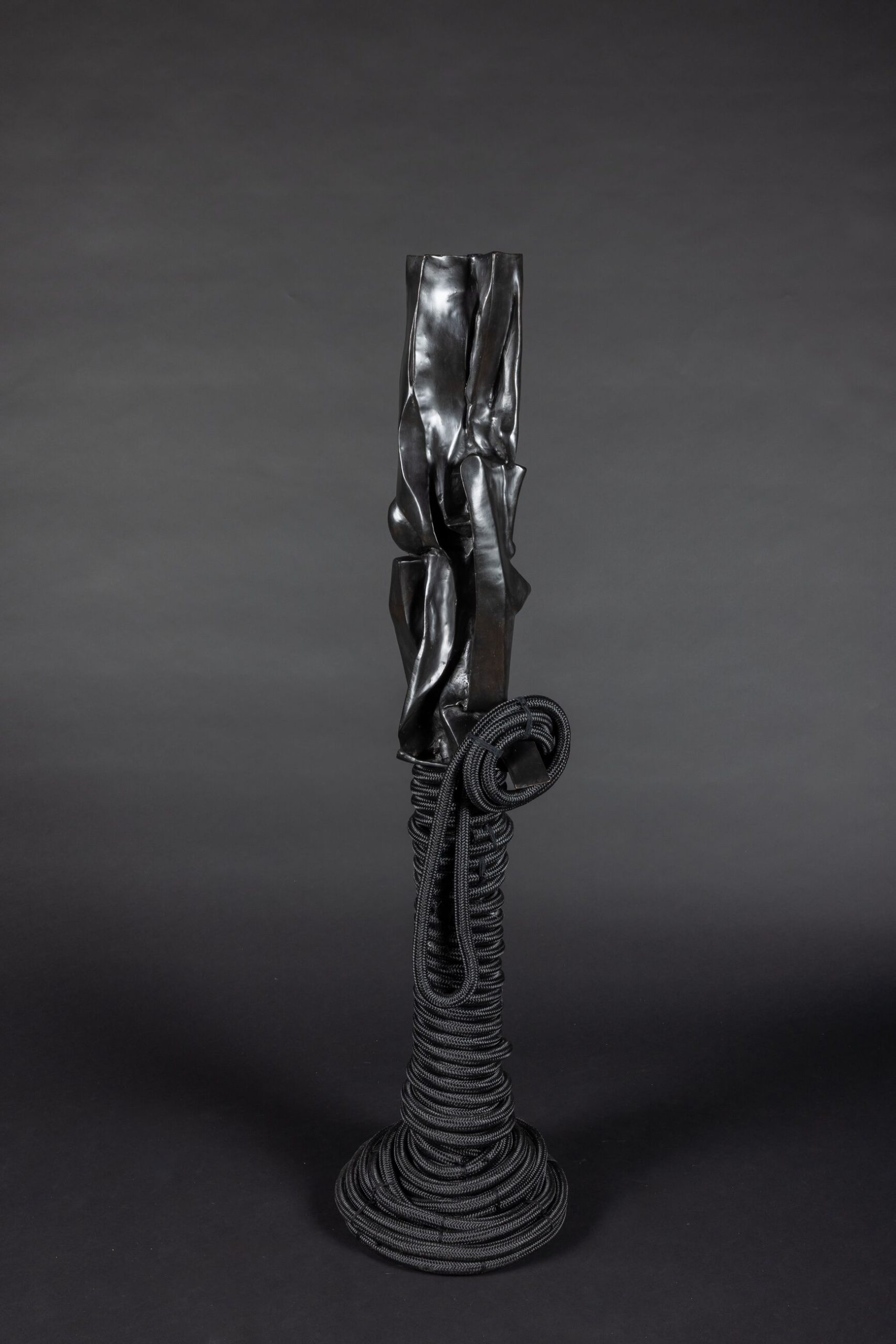
-
- La Musica Amnesia Gold #2 2024 音乐失忆金2# 2024
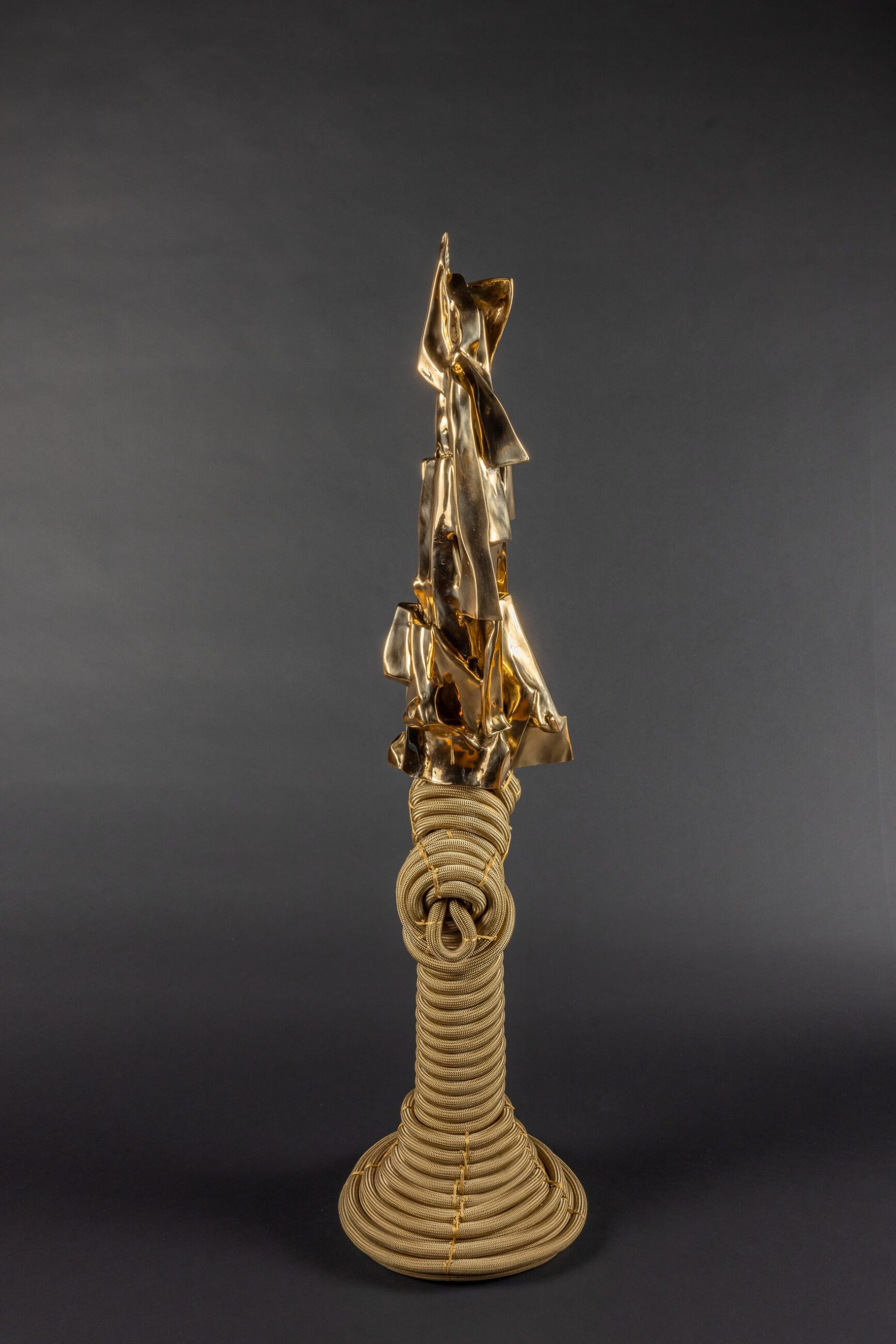
-
- JOSEPHINE RED/RED 约瑟芬·红/红

-
- La Musica Amnesia Gold #3 2024 音乐失忆金3# 2024
芭芭拉·查斯-里布德Barbara Chase-Riboud
约瑟芬·贝克
Josephine Baker
约瑟芬·贝克(Josephine Baker,1905-1975),从密苏里州贫民窟舞女逆袭为巴黎黄金时代偶像的非裔传奇。1925年她以近乎全裸的「香蕉裙舞」点燃巴黎剧场,用狂野舞姿消解殖民凝视,成为欧洲首位黑人超级巨星。二战期间,她以歌手身份为法国情报机构工作,将写有情报的乐谱传递给反抗组织。战后,她被法国总统戴高乐亲自授予「战争十字勋章」和「抵抗奖章」。1961年,又被授予「荣誉军团勋章」和「英勇十字勋章」,以表彰她战时为法国做出的贡献;1963年更与马丁·路德·金并肩站在华盛顿游行最前排,成为这次种族主义大游行中唯一发言的黑人女性。这位被称作「黑珍珠」的女性,终其一生以自身为武器,在种族歧视与战火中撕开自由之路。2021年,她成为了首位安葬于法国先贤祠的黑人女性,印证了其超越娱乐偶像的价值与伟大贡献。
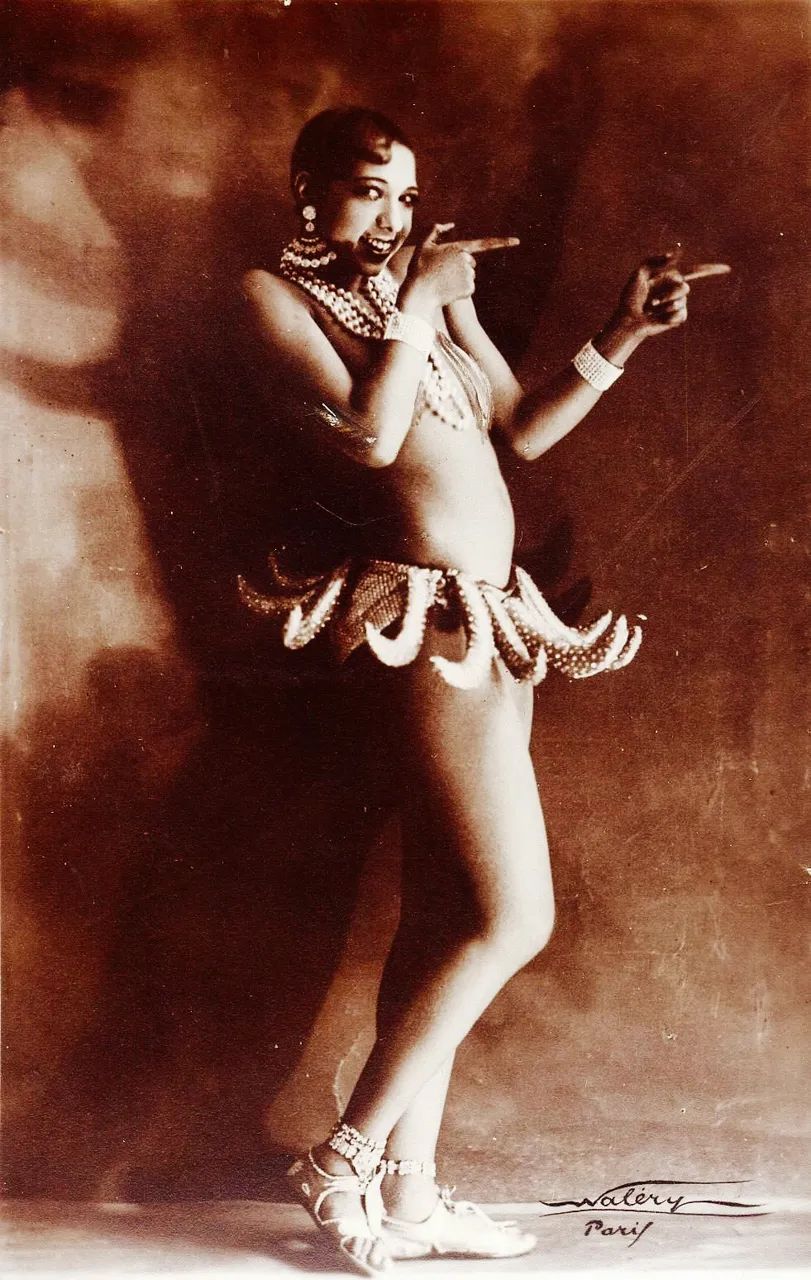
虽然有人批评约瑟芬裸露上身的舞蹈粗俗不堪,却阻止不了她成为当时巴黎最红的黑人女明星。巴黎从来不缺艳舞,可是像约瑟芬那样跳出活力与生命的舞步却很少。她自信、幽默、风趣,不到两年,便成为巴黎家喻户晓的黑人女明星。当时的她广受欢迎,法国女人走进发廊指名要做她同款的油头的短发,Cristian Dior赞助她服饰,海明威跟毕加索都是她的好友,而今天,她的妆容舞蹈香蕉裙都还在被碧昂斯等时尚巨星模仿致敬。(via:YouTube,cr:ChezJosephineBaker)
我与约瑟芬·贝克(Josephine Baker)的缘分始于1961年我第一次来到巴黎,并在布洛梅街48号(48 Rue Blomet)找到了一个工作室。直到我买下这个工作室并开始在那里工作之后,我才意识到布洛梅街正是著名的“黑人舞会”(Le Bal Nègre)所在地,而约瑟芬正是在这里开启了她在巴黎的整个职业生涯,就在隔壁,沿着那条街下去。我觉得这简直是一个不可思议的信号,预示着我们之间将会发生些什么。 ——Barbara Chase-Riboud
两位传奇女性的人生轨迹在1975年4月的巴黎交汇:时年36岁的Chase-Riboud在约瑟芬最后一场演出的后台,目睹了这位68岁的表演者从“老妇”到舞台女神的蜕变。这次相遇在历经半个世纪的酝酿后,终在2022年2米高的的青铜雕塑《约瑟芬·红 / 黑》中爆发——两尊扭曲的金属柱体缠绕彩绳,如冻结的火焰,将约瑟芬标志性的肢体语言铸成永恒。当青铜的冷硬与彩绳的流动彼此角力,恰似约瑟芬用舞蹈劈开种族枷锁的史诗,也暗合Chase-Riboud打破雕塑静态传统的毕生追求。
关于艺术家

Barbara Chase-Riboud 芭芭拉·查斯-里布德
在长达七十年的职业生涯中,Chase-Riboud 创作了一系列革命性的作品,其特点在于创新、技术精湛以及勇敢地面对跨文化历史。
1939 年出生于美国宾夕法尼亚州费城,Chase-Riboud 目前在巴黎和罗马两地居住。年少时,她便在费城艺术博物馆和塞缪尔·S·弗利舍艺术纪念堂学习艺术课程。高中毕业后,Chase-Riboud 在 Temple 大学泰勒艺术学院学习,接受了绘画、素描和雕塑的训练。
1957 年,Chase-Riboud 获得了罗马美国学院的约翰·海·惠特尼奖学金。她第一次接触到铸造厂,这位艺术家开始发展一种新的古代失蜡铸造铜的技术变体,使用可以弯曲、折叠或堆叠的可塑蜡片来铸造后来成为她美学标志的金属丝带。在此期间,Chase-Riboud 用植物和动物材料塑造人物形象,在罗马的一个当地铸造厂将其铸造成大型青铜作品,她至今仍在那里铸造自己的雕塑。早期的重要作品之一是《亚当和夏娃》(1958 年),该作品描绘了在拱形树下交织的人物形象——这是她实验方法的精彩范例,形式上与贾科梅蒂的质感人物形象相呼应。正是在罗马期间,Chase-Riboud 首次前往埃及和希腊,与古代形式和方法的相遇给她的想象力留下了不可磨灭的印记。1958 年,Chase-Riboud 的作品被纳入意大利斯波莱托首届两年一度的世界艺术节。
同年晚些时候,Chase-Riboud 返回美国,在耶鲁大学设计与建筑学院完成 MFA 学位,师从约瑟夫·阿尔伯斯、菲利普·约翰逊、保罗·兰德和阿尔文·艾森曼。作为首位获得耶鲁大学 MFA 学位的美国黑人女性,Chase-Riboud 随后前往伦敦,之后在 1961 年定居巴黎。
在巴黎,Chase-Riboud 建立了成功的雕塑事业,结识了包括贾科梅蒂、詹姆斯·鲍德温、亚历山大·卡尔德、萨尔瓦多·达利、马克斯·恩斯特、多罗特娅·坦宁、雷内·马格利特、莉莉·米勒以及亨利·卡蒂埃-布列松和其门生、摄影记者查斯-里布德在内的一批艺术家和文化名人,并最终与后者结为夫妇。1965 年,与里布德一同旅行时,成为首批访问新中国的美国女性。次年,她代表美国参加了在塞内加尔达喀尔举行的首届世界黑人艺术节。这些国际旅行和展示对艺术家对雕塑和材料的态度产生了持久影响,激励她超越传统的西方艺术史表现模式。
从 20 世纪 60 年代中期开始,Chase-Riboud 开始创作越来越抽象的雕塑,这些雕塑由流动的金属形态组成。转折点出现在她首次将纤维加入这些雕塑中时,她引入了一种独特的视觉语言,摆脱了她所谓的“底座的专制”。Chase-Riboud 开始用瀑布般的丝绸或结绳覆盖雕塑的底座,营造出这些纺织物支撑金属的错觉,违背了重力。关于这一突破,Chase-Riboud 曾说:“在早期的作品中,我用青铜以流动、液态的方式,而羊毛则是静态的。因此,这种权力从青铜转移到丝绸或羊毛上是一种悖论性的转移。”这种对等级制度的巧妙颠倒——是对根深蒂固的权力结构的颠覆——在艺术家纪念马尔科姆·X 的有力纪念碑中得到了体现。这些纪念碑始于 1969 年,即这位著名的美国穆斯林牧师和人权活动家被刺杀后四年,这组 20 件雕塑采用了艺术家标志性的黑色、红色和金色,灵感来源于Chase-Riboud 在东方和柬埔寨旅行时遇到的墓碑。
尽管 Chase-Riboud 居住在法国,但她对 1960 年代的美国民权运动深感投入,这种承诺贯穿于她的视觉艺术和文学作品之中,并一直回响在她的作品中直到今天。
20 世纪 70 年代是Chase-Riboud 文学生涯中的诸多里程碑时刻,反映了她对跨文化历史的承诺和独特见解。1974 年,她出版了一本诗集《Memphis and Beijing》,由托尼·莫里森编辑。1979 年,在托尼·莫里森和好友杰奎琳·肯尼迪·奥纳西斯的鼓励下,Chase-Riboud 发表了她的第一部小说《萨莉·海明斯》,该小说基于她受自由黑人女性萨莉·海明斯启发而创作的一首诗,萨莉·海明斯是托马斯·杰斐逊的情妇。1979 年,《萨莉·海明斯》获得了美国女性最佳小说奖——珍妮特·海丁格·卡夫卡奖(Janet Hedinger Kafka Prize)。Chase-Riboud 在 20 世纪 70 年代继续探索离散历史和奴隶制叙事,她的雕塑作品也反映了她的文学探索,例如她的大型赞比岛系列作品,该系列作品以坦桑尼亚海岸外的岛屿命名。赞比岛雕塑作品呼应了 Chase-Riboud 于 1969-70 年创作的诗作《我们为什么离开赞比岛?》以及她陪同美国国务院组织的展览访问非洲时的印象。
Chase-Riboud 的旅行和对不同文化的不懈沉浸塑造了她整个 20 世纪 70 年代和 80 年代的视野。在这个时期的标志性雕塑系列中,Chase-Riboud 以青铜作品纪念了克莉奥佩特拉,通过想象中的物体传达女性性与革命力量的主题,如这位受尊敬的埃及女王的床铺上覆盖着精细编织的青铜方块。20 世纪 90 年代末,Chase-Riboud 开始创作《纪念碑素描》系列,一系列墨水和炭笔绘制的想象中的纪念碑,纪念文学和历史人物——不仅有克莉奥佩特拉,还有萨德侯爵、纳尔逊·曼德拉、沙巴女王和安娜·阿赫玛托娃。
Chase-Riboud 在其职业生涯中获得了众多公共委托。这些委托中的第一个是在 1967 年,艺术家为此在马里兰州罗克维尔的 Wheaton Plaza 购物中心创作了一座名为“Meta Mondrian”的喷泉。其他重要的公共雕塑作品中包括 Chase-Riboud 于 1998 年创作的“非洲崛起”,这是美国总务管理局委托的作品,用于纪念在曼哈顿下城发现的非洲墓地。
自 1990 年以来,Chase-Riboud 创作了一系列名为《La Musica》的作品。这些雕塑通过材料和雕塑形式的大胆对比,体现了音乐和运动——以及它们的对立面——静止。她最新的《La Musica》系列作品致力于美国出生的法国歌手、舞者和活动家约瑟芬·贝克。贝克是第一位在 2021 年被纳入法国国家英雄墓地——潘泰翁的黑人女性,这一事件激发了Chase-Riboud开始为她创作三座大型纪念碑中的第一座。在《La Musica Josephine Red/Black》(2021)中,一个锐角的延长青铜臂让人想起约瑟芬那著名的优雅肢体,而一条红色绳索悬在地面上,邀请观众预感这位表演者著名的动作、能量和活力。在为这件作品撰写的《追求未来主义雕塑宣言》(A Manifesto for Sculpture in Pursuit of Futurism,2021)中,Chase-Riboud 以此作为未来主义艺术的宣言:“让我们抛弃这些残骸陈旧的几何形体,清理出一片舞台,让狂野的摇摆狂欢得以上演。雕塑绝不能停滞不前。”
Over the course of her seven-decade career, Chase-Riboud has created a revolutionary body of work which is defined equally by its inventiveness, technical prowess and fearless engagement with transcultural histories.
Born in Philadelphia PA in 1939, Chase-Riboud currently resides between Paris and Rome. At a young age, she began taking art classes at the Philadelphia Museum of Art and the Samuel S. Fleisher Art Memorial. After graduating high school, Chase-Riboud studied at Temple University’s Tyler School of Art, where she received training in painting, drawing and sculpture.
In 1957, Chase-Riboud was awarded a John Hay Whitney Fellowship at the American Academy in Rome. Introduced to a foundry for the first time, the artist would begin developing a new variation on the ancient lost-wax technique of casting bronze by using sheets of pliable wax that she could bend, fold or bunch in order to cast the ribbons of metal that would later become a signature of her aesthetic. During this period, Chase-Riboud would mold figures from vegetal and animal matter to be cast into large-scale bronzes at a local foundry in Rome, where she still casts her sculptures today. Among important early works is ‘Adam and Eve’ (1958), which depicts intertwining figures under an arching tree—a bravura example of her experimental methods that resonate formally with the textured figures of Alberto Giacometti. It was during her time in Rome that Chase-Riboud would first travel to Egypt and Greece, where encounters with ancient forms and approaches would leave an indelible mark upon her imagination. In 1958, Chase-Riboud’s work was included in the first annual Festival of the Two Worlds in Spoleto, Italy.
Later that year, Chase-Riboud returned to the United States to complete an MFA at Yale University School of Design and Architecture, where she studied with Josef Albers, Philip Johnson, Paul Rand and Alvin Eisenman. The first Black American woman to receive an MFA degree from Yale, Chase-Riboud left for London and, subsequently, Paris, where she settled in 1961.
In Paris, Chase-Riboud established a successful sculpting career, meeting fellow artists and cultural figures such as Alberto Giacometti, James Baldwin, Alexander Calder, Salvador Dalí, Max Ernst, Dorothea Tanning, Man Ray, Lee Miller, and Henri Cartier-Bresson and his protégé, the photojournalist Marc Eugène Riboud, whom she married. On a trip with Riboud in 1965, Chase-Riboud became the first American woman to visit the People’s Republic of China since the country’s political revolution. The following year, she represented the United States in The First World Festival of Black Arts in Dakar, Senegal. These international sojourns and presentations would exert a lasting influence upon the artist’s attitudes toward both sculpture and materials, inspiring her to move beyond conventional Western art historical modes of representation.
From the mid-1960s, Chase-Riboud began to create increasingly abstract sculptures comprising fluid metal forms. A turning point came when she first added fiber to these sculptures, introducing a visual language uniquely her own and escaping what she dubbed ‘the tyranny of the base.’ Chase-Riboud began covering the bases of her sculptures with cascades of silk or knotted wool, rendering the illusion that these textiles supported the metal, defying gravity. Of this breakthrough, Chase-Riboud has said, ‘In the early pieces, I had used bronze in a fluid, liquid way, while the wool was static. So, there was this paradoxical transfer of power from the bronze to the silk or wool.’ This ingenious reversal of hierarchies—a metaphor for upending entrenched power structures—is exemplified by the artist’s powerful steles memorializing Malcolm X. Begun in 1969, four years after the assassination of the famed American Muslim minister and human rights activist, this group of 20 sculptures in the artist’s signature colors of black, red and gold was inspired by funerary steles Chase-Riboud encountered during her travels in China and Cambodia.
Though living in France, Chase-Riboud was deeply engaged with the American civil rights movement of the 1960s, a commitment felt throughout her work in both visual art and literature, and resonant in her oeuvre through the present day.
The 1970s saw numerous landmark moments in Chase-Riboud’s literary career, reflecting this commitment and her unique insight into transcultural histories. In 1974, she published a collection of poems titled ‘From Memphis & Peking,’ edited by Toni Morrison. In 1979, encouraged by Morrison and by her friend Jacqueline Kennedy Onassis, Chase-Riboud released her first novel, based on a poem she had written inspired by Sally Hemings, the enslaved woman who was the mistress of Thomas Jefferson. In 1979, ‘Sally Hemings’ won the Janet Heidinger Kafka Prize for the best novel by an American woman. Chase-Riboud would likewise continue exploring diasporic histories and narratives of enslavement in her sculptures during the 1970s, often creating works that reflected her literary explorations, as in her monumental Zanzibar series named for the island off the coast of Tanzania. The Zanzibar sculptures echo Chase-Riboud’s poem ‘Why Did We Leave Zanzibar?’ (1969-70) and her impressions while touring Africa to accompany an exhibition of her work organized by the US State Department.
Chase-Riboud’s travels and tireless immersions in different cultures continued to shape her vision throughout the 1970s and 1980s. In a seminal sculpture series of this period, Chase-Riboud memorialized Cleopatra with bronze works mining themes of female sexuality and revolutionary power, conveyed by the artist through such imagined objects as the revered Egyptian queen’s bed draped in an armor of intricately woven bronze squares. In the late 1990s, Chase-Riboud began The Monument Drawings, a series of ink and charcoal drawings of imagined monuments honoring literary and historic figures—not only Cleopatra, but also Marquis de Sade, Nelson Mandela, the Queen of Sheba and Anna Akhmatova.
Chase-Riboud has received numerous public commissions over the course of her career. The first of these came in 1967, for which the artist created a fountain titled ‘Meta Mondrian’ for the now-demolished Wheaton Plaza Shopping Center in Rockville MD. Among other major public sculptures is Chase-Riboud’s 1998 work ‘Africa Rising,’ a commission from the US General Services Administration to commemorate an African burial ground discovered in Lower Manhattan.
Since 1990, Chase-Riboud has unfurled a body of work titled La Musica. These sculptures embody music and movement—and their complement, stillness—through daring juxtapositions of materials and sculptural forms. Her newest works from the La Musica series are devoted to the American-born, French singer, dancer and activist Josephine Baker. Baker was the first Black woman to be inducted into the Panthéon—the French national tomb of heroes—in 2021, an event that inspired the first of three monuments Chase-Riboud has made in homage to her. In ‘La Musica Josephine Red/Black’ (2021), an angular arm of elongated bronze evokes the famously elegant limbs of Baker, while a red cord hovers above the ground, inviting the viewer to anticipate the kind of movement, energy and dynamism for which the performer was famous. In a manifesto written for this work and titled ‘A Manifesto for Sculpture in Pursuit of Futurism’ (2021), Chase-Riboud makes a proclamation for the art of the future: ‘Let us jettison the stale geometry of these remnants and clear terrain to host a raucous, swinging romp. Sculpture must not sit still.’